International Women’s Day 2026: Rights. Justice. Action. For ALL Women & Girls
This International Women's Day, join us in celebrating the female staff of the Linnean Society.
Published on 8th March 2026
As a Learned Society with a long history, it is perhaps unsurprising that women have not always occupied the same space as men. It wasn’t until 1904 that women were afforded the ability to become Fellows of the Society. Yet jump forward to today, and the majority of our staff are women. While we thoroughly enjoy celebrating the achievements of our membership and the work of the broader scientific community, we sometimes forget to acknowledge the hard work that goes on behind the scenes. This International Women’s Day we are shining a light on our staff, championing the lessons learned from the past to inform the future.
With the 2026 UNESCO theme covering justice and action, I invited staff to offer their opinion on this topic, how it related to their work as women in this sector and any barriers they still deemed important to overcome. The Society is awash with strong, inspiring women, and I invite you to read about their experiences below.
Gail Cardew – Chief Executive Officer
When we were thick in the discussions about our new strategy, we all felt strongly that being a Fellow of the Linnean Society should be about building a community where individuals readily share their experiences, knowledge and support with others. A culture of support and kindness, to each other and the natural world, felt more appropriate than transactional ‘member benefits’. Our events programme, blogs, journals and Linnean contributions are therefore awash with diverse Fellowship contributions – all telling stories about their spectacular activities in pursuit of our mission to understand and protect nature. Everyone sharing generously and, in so doing, receiving the wisdom of the entire Fellowship community in return.
However…
The percentage of women joining the Society remains stubbornly low. Perhaps unsurprisingly, considering that although around 60% of the GCSE, A-level and undergraduate biology cohorts in the UK are girls, the figure drops to around 15% at professorial level. Historically, there have always been more male Fellows than female, but I naively thought that by framing Fellowship in this supportive way, and by also welcoming contributions from all those actively contributing to our mission (i.e. not just academics) we would start to see more women joining.
While this year’s IWD2026 focus on justice, action and support reminds us to act with kindness and respect, I’m choosing to highlight this stubborn feature of our Fellowship on IWD2026 to show that hidden barriers remain, and that our community must adapt and change to welcome more women into our wonderfully curious, nature-positive Fellowship community.
Leonie Berwick - Publications Manager
Over my working life, I have definitely seen a change in how women are viewed and treated at work. When I first joined the Society, my role focused on publishing. I worked on several large reference projects, including a volume on botanical type specimens and an annotated bibliography of natural history works. They were mammoth undertakings but deeply rewarding, and I was proud to help bring them to fruition.
With my background being in publishing, I was especially pleased when I was later given the chance to help set up our first education programme. It meant stepping beyond my original role and trying something new. Looking back, I don’t know if that opportunity would have come so easily 40 or 50 years ago.
The Society’s staff has ebbed and flowed over its 200-ish-year history. It began as an entirely male workplace, but by 2026 it looks very different. Over many years we have tried to build a place where every voice matters—within the team, across our membership, and in our events, publications and collections. We have made a start, but there is so much more to do.
In small teams like ours, projects often begin as labours of love and grow into lasting parts of our work, strengthened by both wide perspectives and careful expertise. I see my colleagues working hard on projects, exhibitions and lectures that invite many people into conversations about nature and the history of science. They try to be open about the stories we tell and how we tell them. I am proud to be part of a team that listens carefully to many voices.
Scarlet Forrester - Engagement Officer
Science communication straddles a number of different disciplines and as such sees all sorts of different people from different backgrounds. The joy of this is a huge range of experience – always more to learn, to teach and to share. It’s a lot like working with children, even when children are not the audience; the enthusiasm is contagious. Everyone just wants to learn and have fun doing it.
It’s a field where I have really experienced reciprocity and support, especially from other women in similar roles. Though many sciences remain staunchly male dominated fields, there is an incredible wealth of diversity and experience from the women in science communication. More importantly, in my mind, the role is an opportunity to teach what could be the next generation of women in STEM about their history. There is still a long way to go to ensure access to science is equitable and fair; working for a historical society reveals just how bumpy the road has been, and we’re not off of it yet.
From another perspective, I have found that the world of sci-comm itself is not, strictly, a gendered one. In these positions I have felt like being a woman can mean nothing, and that means absolutely everything. It is about the science instead.
The people in the field of science communication are completely bizarre and bursting with passion, and it has been these delightfully strange individuals who have offered me the most support over the years, be it with writing demonstrations, workshopping ideas, or fighting for our rights in the workplace. I have never met a group more ready to put the things they believe in before their own comfort.
Thanks to science communication for introducing me to some of the weirdest women out there, and for those very women for making the field what it is.
Anna Perman – Head of Engagement
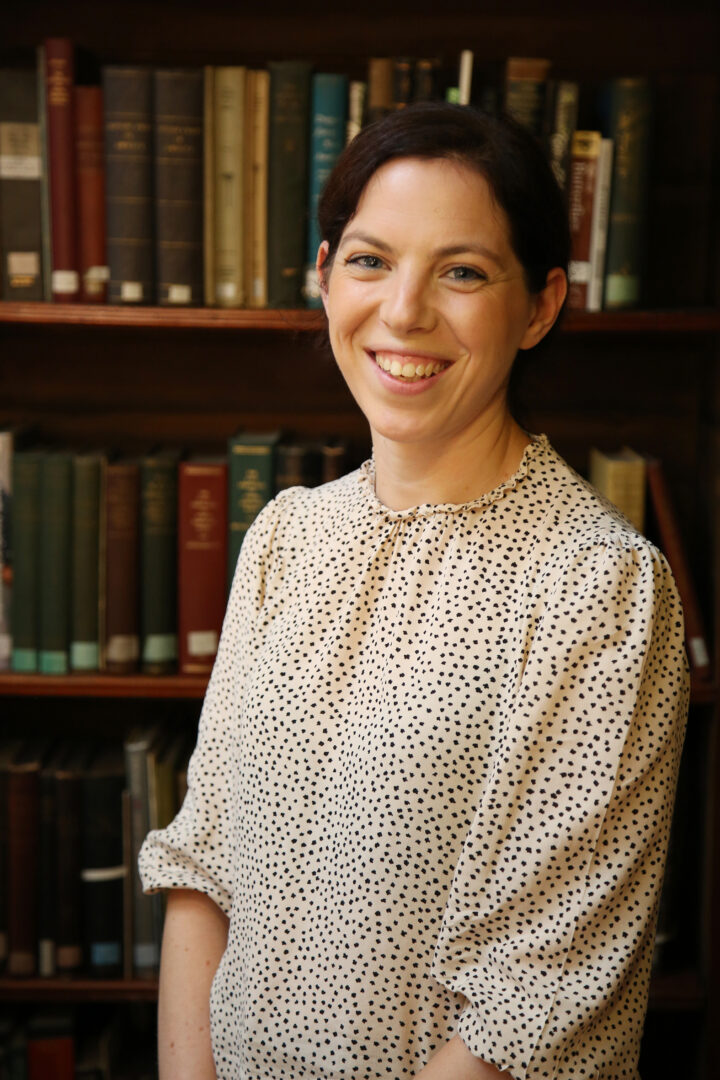
Having spent most of my career in the charity sector, I’ve worked in plenty of all or mostly female teams and had the luck to work with so many incredible women. As I get a little older though, I find myself getting angry about things I once just accepted as part of life. The event chair who was a serial groper, the speaker who took young female volunteers for rides in his car, the millions of times I would say something in a meeting, only to hear it repeated a few minutes later by a man and greeted with praise. Today I see friends go on maternity leave and get treated poorly upon their return, even taking more junior roles to be able to work part time to care for their children.
Worse still, I think about the complacency I once felt, thinking we’d solved so many persistent problems. We just have to look at the number of scientists going to Epstein’s island, and the way they spoke about women behind closed doors to realise that sexism hadn’t gone. It had just worked out how to hide really well.
What brings me a bit of comfort is thinking what actions we can take. I’m very pleased that just over half of our speakers and contributors in 2025 were women. We’re lucky to get lots of talk and article proposals – however only a tiny proportion are from women, so getting an equal programme requires huge amounts of work. Lots of our content also focuses on women in science. Maria Sybilla Merian is a personal obsession, and she features strongly in our life cycles school workshops, and only this week we published a blog on a journal article about gender disparities in natural history collections.
Becky Darnill - Project Archivist
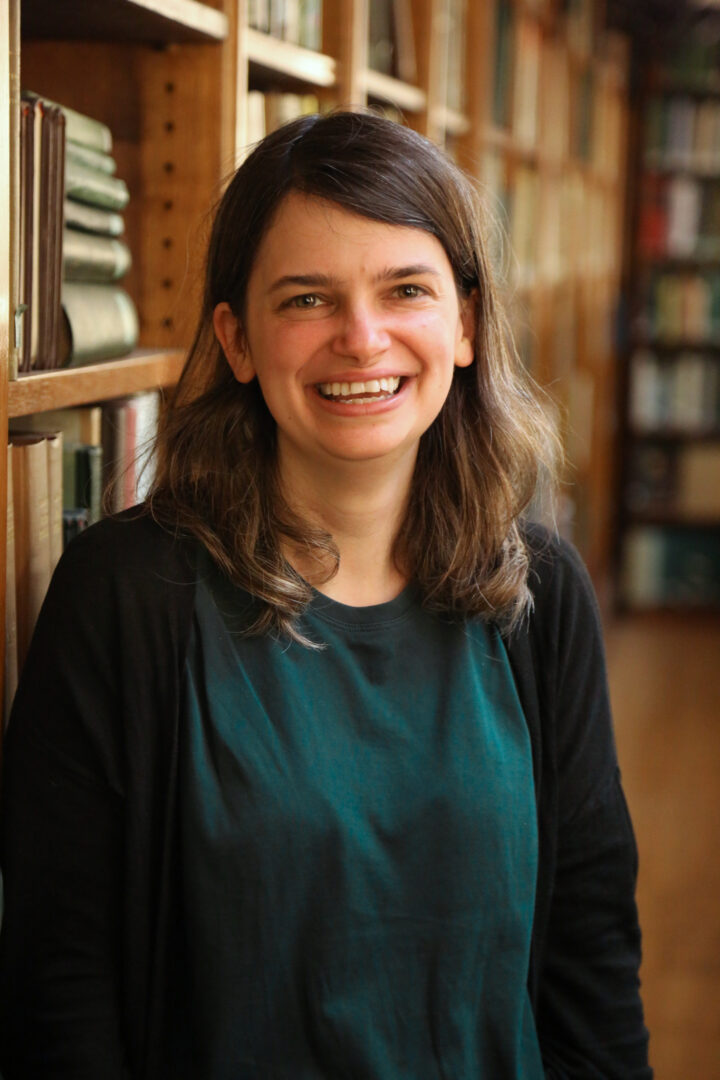
As a project archivist cataloguing the Percy Sladen Memorial Fund (PSMF) 1, I have come across inspiring women who were pushing the boundaries in their scientific work in the early 20th Century. One such figure is Alice ‘Alick’ Embleton who was among the first woman to be admitted to the Linnean Society, and in 1911 the first female to present a paper at the Society on ‘Anatomy and Development of a Hymeropterous Parasite of a Scaly Insect (Lecanium Hemisphoericum)’. Alice was also one of the first recipients of the PSMF in 1905, receiving a grant for an ‘investigation of insect cytology’. Her application highlights the barriers that women faced in undertaking a career in scientific research. Alice stated that she needed the grant as ‘I have no private income, and my father is not in a position to help me…unless I get some aid soon I must give up my research to earn my living by teaching’.
Although in the early 20th Century the recipients of the PSMF were predominantly male, there were a number of women receiving grants who were pioneers in their scientific fields. This included Nina Frances Layard, a leading prehistorian and archaeologist, and Dorothea Bate a pioneer of archaeozoology. There are many more that I would love to mention here!
1 Cataloguing these applications I hope will provide a spotlight to the contribution that these pioneering women have made to science in the early 20th Century which for a long time has been hidden.
Katie Lau – Events and Communications Manager
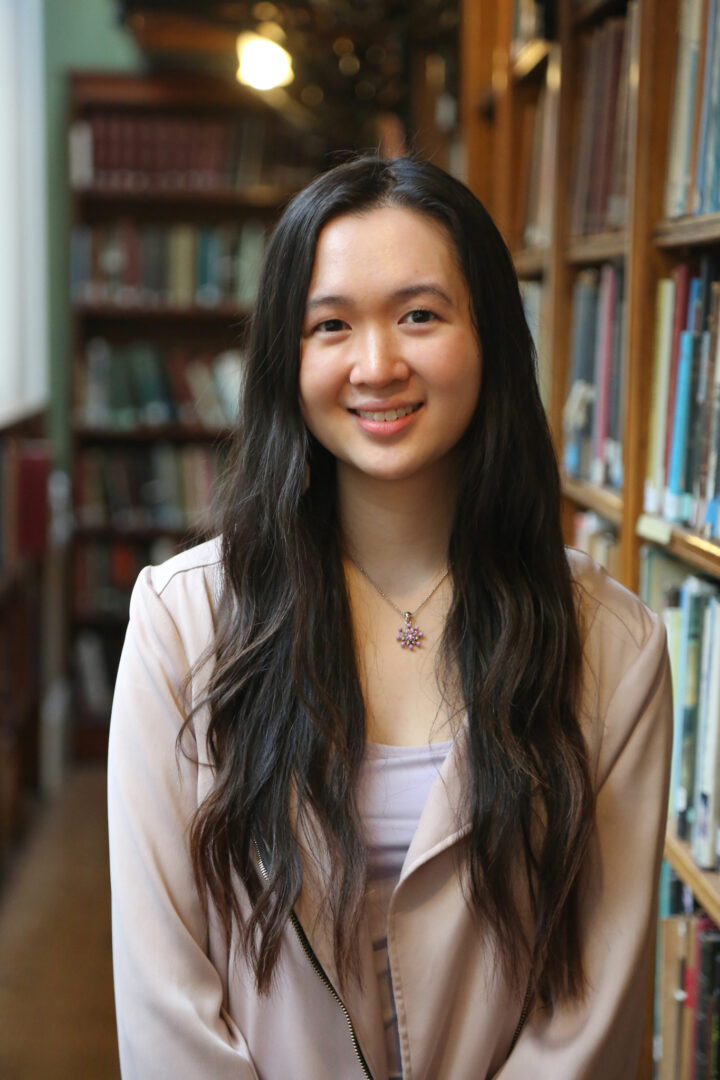
My education and career so far has largely spanned working in learned societies, or studying male-dominated subjects; so I’ve always been really encouraged by seeing how women have shaped and risen in what were initially exclusively-male fellowships – like that of the Linnean Society. I love seeing our female staff bring their creativity, wonderful personalities and big-picture thinking to our work here. As a STEM and outreach/engagement professional, I’ve always felt a sense of community and comradery among the incredible women I’ve either worked with or studied alongside: we’re finally shaping the work of these learned societies and reframing perceptions of them – and these organisations go centuries back without women being in the picture! But we’re also able to do that because of the suffering and sacrifice of all the women in the centuries before us, so that sense of community/comradery is really felt through our entire history too.
I’d say one thing I love about being the Events and Communications Manager here is that I get to help incredible female scientists share their work with the public. In many ways, they represent how we feel about the importance of women in natural history related research. I hope our events programme enables other female scientists to feel like they can have a platform to advocate for the ground-breaking work they do.
Ayesha Meredith-Lewis – Education Manager
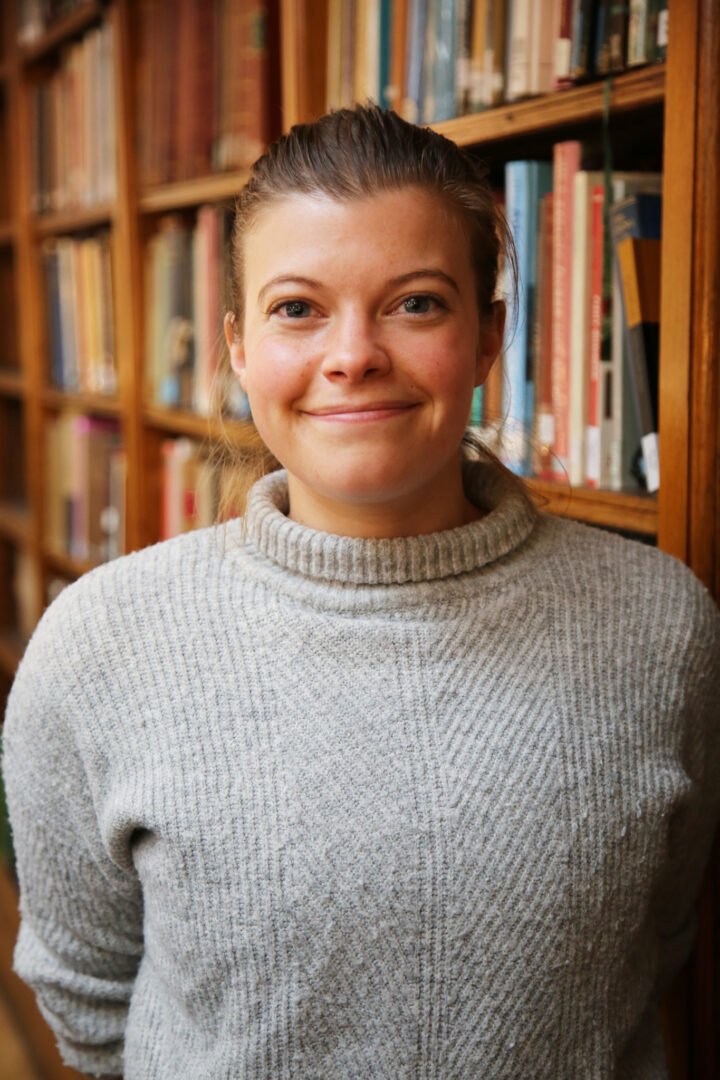
For International Women’s Day, I’m proud to have built a career that has given me the opportunity to travel and work in many different places, collaborating with diverse communities and learning from a wide range of perspectives. Being able to contribute to environmental education projects around the world has been something I have be honoured to be part of.
I’m especially proud of the opportunities I’ve had to encourage young girls to pursue their passion for STEM — creating spaces where curiosity is celebrated, where science feels accessible, and where they can see that their ideas truly matter. However, there is still much to be achieved. Barriers remain in terms of representation, pay equity, leadership opportunities, and the subtle biases that can shape confidence and progression. We must continue working towards a world where girls/women not only feel welcome in STEM, but are supported, valued, and visible at every level.
Alice Cheetham – Nature Clubs Project Manager
I’ve worked in outside-the-classroom education for a while now and have been fortunate across all my various jobs and time in higher education to be surrounded by wonderfully supportive family, teachers and colleagues. A lot of my career has been with school children across primary and secondary – and there’s plenty of young girls who are keen to get hands on in nature, yet at higher levels women are underrepresented across the board in STEM (Women in STEM Statistics: Progress and Challenges, December 2025).
A huge part of my role as Project Manager for Nature Network with the Linnean Society is to try and foster that enthusiasm. It’s well recognised that the transition to secondary school is a tumultuous time for any young person. Not only are they uprooted from the normality of primary school, but now there’s new expectations to juggle – social hierarchies to figure out, subject choices to make, high pressure exams and puberty are all in the mix! It’s no wonder that there’s a drop in engagement from young people. Once you start to dig deeper, there are some pretty sad statistics to be found; research by UCL found that girls in year 9 reported feeling significantly less safe in 2023 compared to pre-pandemic surveys (Secondary pupils in England among the least emotionally engaged with school, April 2025). Young girls need our support now, as much as ever.
The landscape of women in science has changed immensely over the last century for the better, but we can’t rest on our laurels – there’s still plenty of work to do! And it’s our responsibility to support and uplift each other to become role models to those who will come after us.
Georgia Cowie - Journal Officer
Working in science has been something I am lucky to have been sure of for as long as I can remember. Raised by supportive parents (with one hell of a mum) that encouraged my every decision – including the questionable two weeks I spent volunteering on a pig farm - I have never once felt like there was something I couldn’t achieve if I worked hard enough. Science has always felt welcoming to me; I have found my people here, from the weirdos at work who encouraged me to step into public speaking (Scarlet & Dani, looking at you), to my course mates who got up at 4am with me in an attempt to see otters in Borneo (spoiler: we failed), science has offered a bridge between myself and many incredible – and often female – individuals.
Yet, whilst I have been lucky to come from a privileged background that has enabled me to work in the poorly paid nature sector, I have come across casual sexism that appears ingrained in the behaviours of others. From being told I am "combative" in meetings when simply voicing my opinion, to having someone say things just "come easily" to me when I know I have had to put in the work, it's evident that there is still a need to build up the voices of women and encourage equity as well as equality.
Though these instances unfortunately stand out, that is not the whole story. Looking back at my career, I am pleased to say that some of the most inspiring people around me have been women. My year 10 History teacher Miss Scott; my school friends who I am so proud of and who continue to motivate me; my supervisor Sally Faulkner; the colleagues whose stories you have read above; and the many female speakers who have visited the Society. Working now as the Journal Officer, I am constantly inspired by the many women acting as lead authors of papers. They are defined not by their gender, but by their passion and enthusiasm for their research.
As I sit writing this, considering the steps forward that have been taken for women in the UK, I can’t ignore the sacrifices of those who came before me, nor the struggles of women around the world today. The news right now feels bleak, with the co-option of women’s rights (sorry, the “safety of women and girls”) at the forefront of global politics. It’s hard not to feel distressed, and rightfully so. It’s the very reason why International Women’s Day exists. But, if a historically male-dominated Society can evolve to be what it is today, then it gives me hope. Science, after all, is for everyone.