The Long and Short of Owl Legs
Exploring how owl hindlimb anatomy reflects the demands of diet, movement and evolutionary history. Written by guest blogger Keira Blake.
Published on 26th October 2026
Owls are perhaps best known for their enormous eyes, silent wings and formidable talons. Their legs, by comparison, seem less remarkable. Yet beneath their feathers lies a surprising diversity of bone proportions, shaped by the very different lives these birds lead. A new study, published in the Zoological Journal of the Linnean Society, takes a closer look at this hidden diversity, asking what owl hindlimbs can reveal about the evolutionary and ecological pressures that have shaped them. The study uncovered a complex balance between inherited anatomy and the demands of life.
What Lies Beneath the Feathers?
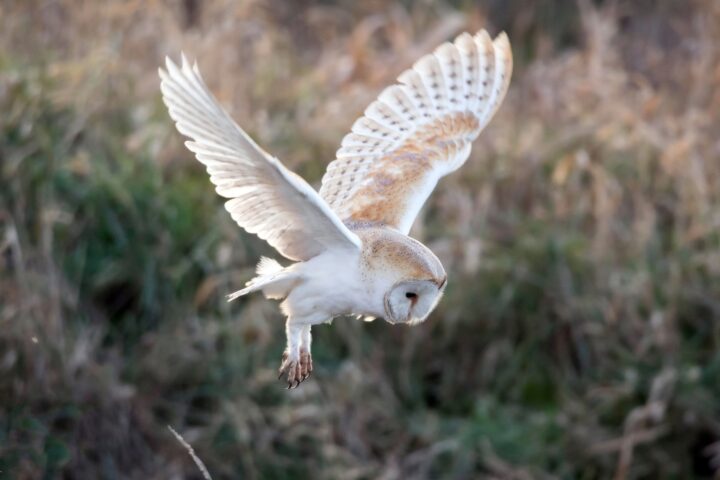
Figure 1: Barn owls (Tyto alba) have relatively long hindlimbs, as seen here as this individual juts them out to capture prey out of shot. Their long limbs have enabled them to capture prey in dense vegetation.
The shape of an animal’s limbs can reveal a great deal about how it interacts with its environment. Limb proportions influence how an animal moves, how efficiently it can move through different environments and how it uses its body when capturing prey or evading predators. In birds, these differences can be particularly pronounced as different species have evolved to occupy a remarkable variety of ecological niches.
For owls, the hindlimbs are closely involved in prey capture. Their legs must support the body, position the feet and deliver the powerful grip of their talons. Variation in hindlimb anatomy may therefore reflect the ecological demands faced by different species.
The researchers focused on three bones in particular: the femur, tibiotarsus and tarsometatarsus. The femur connects the hip to the knee, the tibiotarsus forms most of the lower leg and the tarsometatarsus extends from the ankle to the toes. Together, these bones make up the main skeletal framework of the owl hindlimb.
They measured these bones in 99 specimens representing 18 owl species, comparing their proportions in relation to body size, diet and evolutionary relationships.
The Same Solution to Different Problems
Body size explained some of the anatomical differences observed between species. Larger owls generally had longer hindlimbs, but the proportions of the individual bones varied even after accounting for overall size.
The tibiotarsus was generally the longest component of the hindlimb, while the femur and tarsometatarsus made up smaller proportions. However, some species showed particularly distinctive hindlimb proportions. Figure 2 provides a useful comparison of hindlimb morphology across the focus species, illustrating both differences in overall hindlimb length and in how that length is distributed between the three major leg bones.
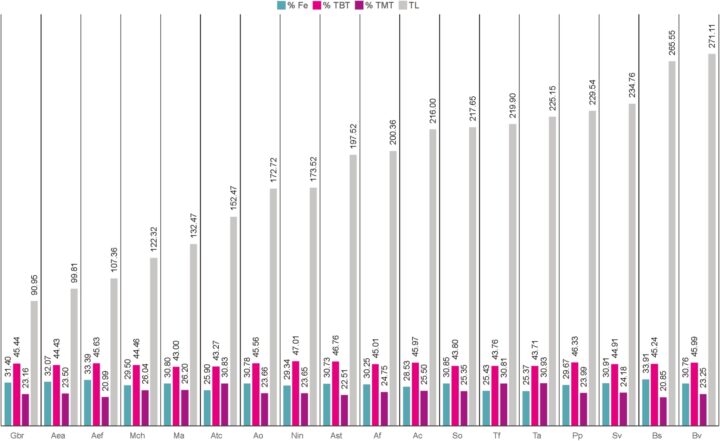
Figure 2: Relative proportions of the femur, tibiotarsus and tarsometatarsus across the owl species studied, showing the variation in hindlimb structure between species. Taken from Picasso et al., 2025.
The barn owl (Tyto alba) had a surprisingly elongated tarsometatarsus. Both the barn owl and American barn owl (Tyto furcata) were among the species with the greatest relative tarsometatarsus length.
This may be linked to their hunting behaviour. Barn owls specialise in feeding on small mammals and often hunt in dense vegetation. An elongated tarsometatarsus may help them to move rapidly while pursuing prey through these environments.
Interestingly, the burrowing owl (Athene cunicularia) showed a similar anatomical pattern, despite having a very different lifestyle.
Burrowing owls are highly terrestrial and spend considerable time walking on the ground, including around the burrows that give the species its name. Their relatively long tarsometatarsus may therefore be associated with efficient terrestrial movement rather than movement through vegetation.
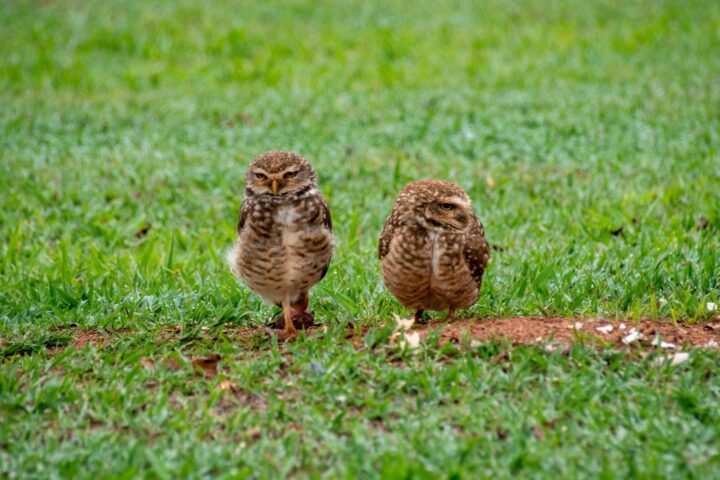
Figure 3: Two burrowing owls (Athene cunicularia), illustrating the terrestrial lifestyle associated with their relatively long tarsometatarsus.
The same anatomical feature can consequently occur in species facing very different ecological demands.
Sometimes Shorter Is Better
Other owl species showed the opposite pattern.
The boreal owl (Aegolius funereus) and snowy owl (Bubo scandiacus) had particularly short tarsometatarsi. Their hindlimb proportions instead placed greater emphasis on other segments of the leg.
These shorter tarsometatarsi may reflect a different balance of movement and stability from the more elongated limbs seen in barn owls. For owls that capture prey with their feet, different combinations of hindlimb proportions may therefore favour different aspects of movement and prey capture.
The findings suggest that there is no single ideal owl hindlimb. Different combinations of bone proportions may provide advantages under different ecological conditions.
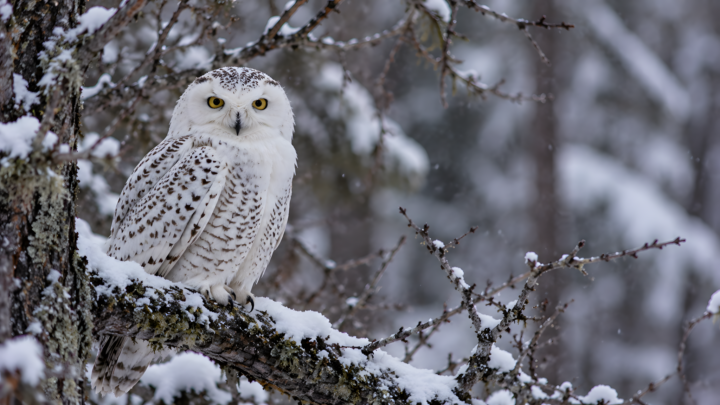
Figure 4: A snowy owl (Bubo scandiacus), one of the species with a relatively short tarsometatarsus.
An Inheritance Written in Bone
Ecology was revealed to be not the only factor associated with differences in owl hindlimb anatomy.
The researchers found evidence of phylogenetic signal, meaning that closely related species were more likely to have similar hindlimb proportions than more distantly related species. This suggests that evolutionary history may have influenced the ways in which owl anatomy could change over time.
Species do not evolve from a blank slate. Each lineage inherits anatomical characteristics from its ancestors and these provide the starting point for later adaptations.
Dietary evolution appears to be another example. The two major owl families, Tytonidae, which includes the barn owls, and Strigidae, which includes the true owls, followed different dietary trajectories over their evolutionary history. Fascinatingly, true owls are distinguished from barn owls by a number of morphological features alongside diet, including their facial structure, skull shape and feather arrangement.
The Tytonidae lineage became increasingly specialised towards small rodents, while the Strigidae lineage appears to have diversified from an ancestral insectivorous diet towards a broader range of prey, including mammals.
These different dietary histories may have contributed to the contrasting patterns of hindlimb morphology seen between the two groups.
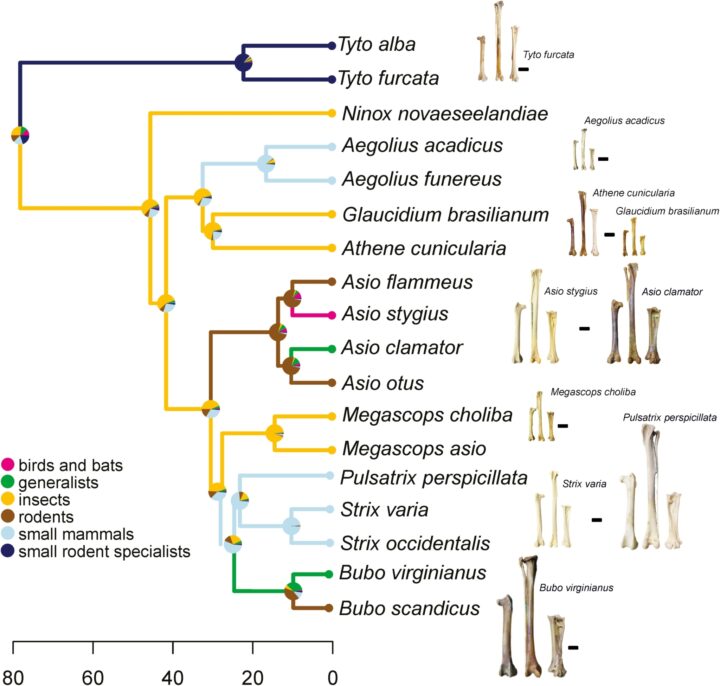
Figure 5: Evolutionary relationships, dietary history and hindlimb morphology across the owl species studied. The bones are shown at the same scale to highlight the differences in their proportions.
A Skeleton Shaped by Ecology and Evolution
Owl hindlimbs reveal a surprisingly complex interplay between ecology and evolutionary history. The similarities between barn owls and burrowing owls demonstrate that similar anatomical proportions can arise in species with very different lifestyles, while similarities between closely related species show that evolution continues to work within the anatomical framework inherited from their ancestors.
Owl hindlimbs are therefore more than structures to move and capture prey. Their proportions preserve a record of the different ecological pressures faced by each species, alongside the evolutionary history that shaped how they could respond to them. Understanding these relationships give scientists a way to look beyond what an animal’s anatomy does and ask why it evolved that way in the first place, helping to build a clearer picture of how ecological pressures, evolutionary history and adaptation interact to produce the diversity of forms we see today.
Guest Blogger
Written by guest blogger Keira Blake, a BSc Zoology graduate from the University of Sheffield with a particular interest in species recovery and predator reintroduction in the UK. She is passionate about the role of science communication in nature conservation, particularly sharing science in ways that make it accessible and engaging beyond academia. Edited by Georgia Cowie.
About the Journal
This blog was inspired by a paper published in our Zoological Journal, an international journal publishing high-quality papers covering systematic & evolutionary research from species both alive and extinct. Want to contribute to a blog? Contact the Journal Officer directly.