Exploring and Expressing Queerness in Natural History
Danielle Crowley writes about how nature has always been a place of safety and comfort, where gender doesn’t matter, and the role of queer-focussed programmes in institutions.
Published on 7th July 2026
Like many scientists (like many people full stop), nature has been a place of safety and comfort. It’s a place where how I am perceived doesn’t matter, where gender doesn’t matter. Where the only thing my body has to do is carry me through the space and allow me to interact with it. Nature is not binary, never has been or never will be, and learning about it and its fluidity was a comfort when I was on my own queer journey (one which is still ongoing and will never be done, just like any other piece of research!).
It is no coincidence that my favourite people love nature, or are queer, and are often both! As author and activist Leslie Feinberg said: "Nature held me close, and seemed to find no fault with me", a sentiment I keep close to my heart.
I am still early in my career, but even earlier in it I hid myself from my colleagues, because we have to, unless they can be trusted to be safe. I once let slip that I was queer on day three of a twenty-day offshore research trip. I still remember those seconds of fear, that if they reacted badly I was trapped with these people in the middle of nowhere, but thankfully it was all fine.
These are mental loads that my cisgendered, heterosexual colleagues don’t have to think about. I think about the location of conferences and opportunities and if they will be safe for me all the time. I often bring up my queerness when meeting people for the first time or in interviews, because I have to watch their faces and make a judgement on whether I will be okay here.
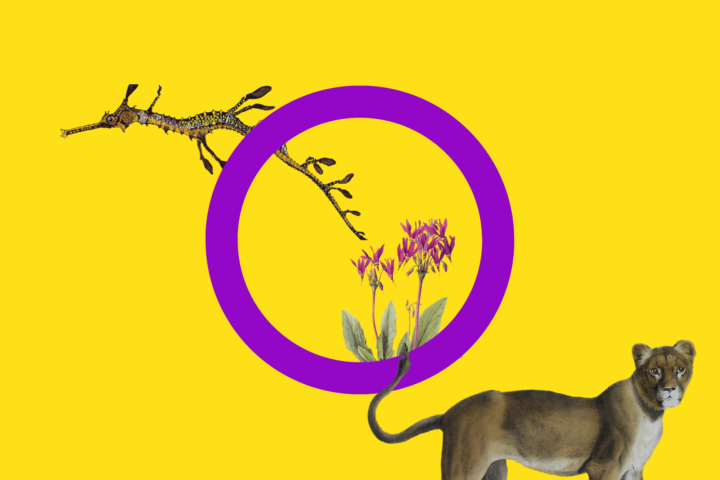
So being given the freedom and support to create a Linnean Pride programme was a highlight of my career so far! It means more than I can say to see the Natural History Pride flags I designed still being used. Delivering Queer Ecology tours and seeing people feel safe and hearing our stories is necessary work, for how can we go forward if we don’t understand our history and how it has led to our present-day realities? I was beyond honoured to be invited back to the Society to deliver another Queer Ecology tour at the end of last year, and to be a co-organiser and chair of the Exploring Queerness in Natural History symposium in February. I had never seen so many queer ecologists, nature enthusiasts, and academics in the same room before, nor met so many people who understood the challenges of just existing within an ivory tower that often doesn’t want us there.
It is not an exaggeration to say things are getting worse in this country and around the world. The decision by the Supreme Court on the definition of womanhood has caused the UK to fall to its lowest ever ranking in the European Rainbow Index. Corporations, a good indicator of societal views (regardless of how you feel about them), have quietly withdrawn sponsorship from Pride parades. Things are getting scary for queer people in this country, with the rise of far-right parties like Reform UK contributing to an increasingly hostile landscape.
We must do better than this. We must stop leaving the burden of making things better to those early in their career or those directly affected by such issues. We must stop tolerating bad faith “concerns” and call bigots out for what they are. To queer readers, we have to show up for each other like never before. To allies, show up for us and do the work!
There is so much more work to be done. There are countless people to talk to and fieldwork guidelines to improve upon, petitions to sign and MPs to email. I’m glad to do so, because I consider this work an obligation for future queer scientists, just how the work of past activists paved the way for me to be where I am. Being visible is work in itself, as is carrying these tasks along with the immensity of a PhD. But now I have undeniable proof that this is not solitary work, and queer ecologists have always been here, and always will be. Like the ecosystems we study, we may be threatened, but we are resilient and can thrive, when given the space to do so.
Danielle Crowley (Dani) is a PhD student based in Bangor University in association with the Zoological Society of London and Natural Resources Wales, studying the cultural and ecological importance of sharks to Welsh communities in a changing climate.