From a Land Down Under: How Australian Geckos Colonised Melanesia
Understanding the dispersal and evolution of a species-rich gecko group across Australia and the South Pacific. Written by guest blogger T.W. Fieldsend.
Published on 3rd July 2026
In 1854, an obscure young naturalist named Alfred Russel Wallace set sail from England, on a mission to catalogue and study the natural history of Southeast Asia and the Pacific. The remarkable eight-year voyage that followed piqued a scientific curiosity in the biogeography of the region that persists to this day, and a recent study by Oliver et al., published in the Biological Journal of the Linnean Society, continues this rich investigative tradition.
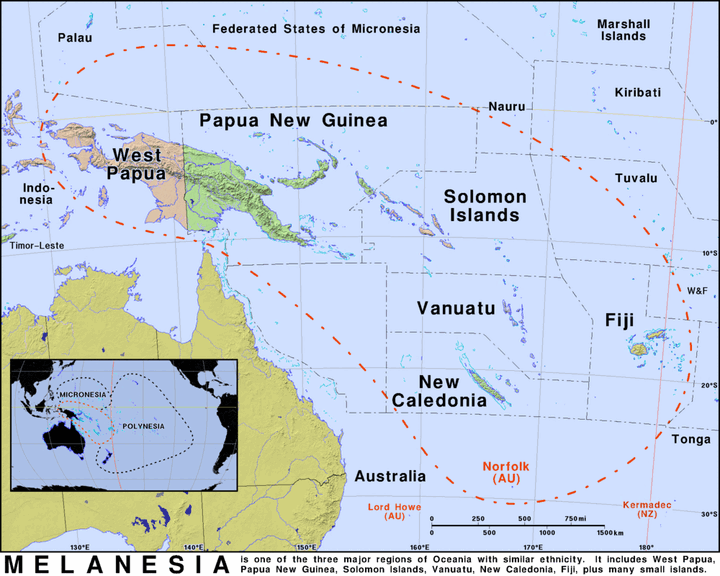
Figure 1: Map of Melanesia (within dashed red line) and the wider Pacific region (inset image). Public domain image from https://ian.macky.net/pat/map/mela/mela.html.
Geckos Branch Out
The focus of the study was the gecko genus Gehyra, of which about 55 species occur in Australia, and around 17 in Melanesia (centred on New Guinea) and the wider Pacific (Fig. 1). Oliver et al. built phylogenies—essentially, evolutionary family trees—using DNA sequence data from 116 Gehyra geckos. These phylogenies consistently supported the existence of six distinct evolutionary lineages (‘branches’ on the tree), including two that were almost-entirely confined to Australia (the variegata and australis lineages) and three that were limited to the islands of Melanesia (the oceanica, membranacruralis, and vorax lineages) (Fig. 2). The authors used this newfound knowledge of Gehyra’s evolutionary history both to better-understand historical patterns of dispersal between Australia and Melanesia, and to investigate why several island-dwelling (‘insular’) Melanesian Gehyra species have evolved to be much larger than their mainland Australian counterparts.
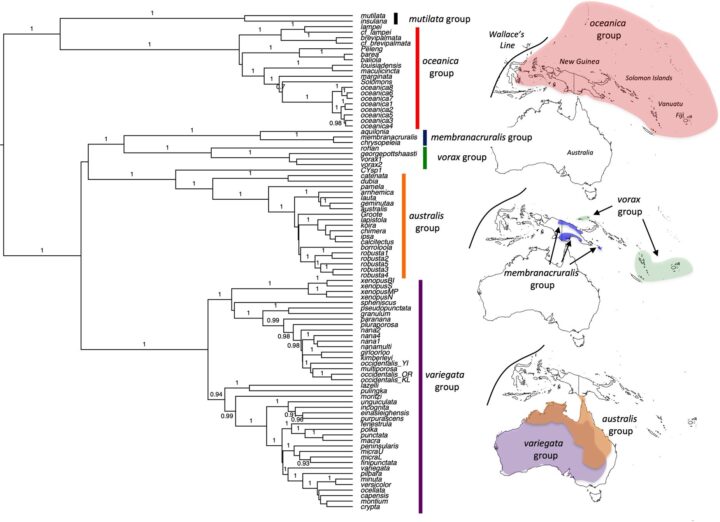
Figure 2: Phylogeny showing the six major Gehyra lineages of Australia and Melanesia, colour-coded along with their native ranges. Reproduced from Oliver et al.
Saying ‘hooroo’ to Australia
Given that Australia and New Guinea were historically much farther apart than they are today, Oliver et al. tested a seemingly reasonable hypothesis: that Gehyra dispersal events have occurred most frequently during the last 10 million years, a period of Earth’s history in which sea level fluctuations caused land bridges to form between Australia and New Guinea multiple times. Surprisingly though, the authors found no evidence to support this hypothesis, and—perhaps more surprisingly—they also found that dispersal between Australia and Melanesia has been rather limited generally, with Australian Gehyra probably only colonising Melanesia around three times.
These findings are somewhat unintuitive, considering that several Gehyra species are excellent dispersers and colonisers (a case in point being G. mutilata, which has established non-native populations as far afield as Mexico). According to Oliver et al., the most plausible explanation for such limited dispersal is ‘niche conservatism’; namely, the inability of Gehyra species to adapt from the arid, flat, and temperate climes of Australia to the wet, mountainous, and tropical islands of Melanesia and the Pacific. The authors suggest that the Australian taxonomic groups that have successfully and repeatedly dispersed to Melanesia are likely pre-adapted to doing so, possibly due to a close association with mesic (moderately wet) forest habitats.
Island Giants
‘Island gigantism’ is a well-known phenomenon whereby insular organisms evolve larger body sizes than their mainland counterparts. There is certainly precedent for island gigantism in Pacific geckos: the largest gecko species alive today—Rhacodactylus leachianus, which can reach almost 17 inches (43 cm) in length and weigh almost half a kilogram—is endemic to the Pacific island of New Caledonia, an island that was also once home to Gigarcanum delcourti, a two-foot-long (60 cm) monster of a gecko that became extinct in the 19th century.
Oliver et al. observe that two of the six major Gehyra lineages—membranacruralis and vorax (Fig. 3)—provide tantalising evidence of island gigantism, being both entirely insular, and typically much larger that Gehyra from Australia and Asia. Interestingly, these two lineages proved to be sister taxa (meaning that they are more-closely related to one another than to any of the other four Gehyra lineages), raising the possibility that large body-size evolved only once, in the ancestral lineage of to both membranacruralis and vorax, whose descendants subsequently radiated and spread. Furthermore, the third insular lineage (oceanica) only exhibited weak evidence of increased body-size. Thus, no general pattern of island gigantism was observed in Gehyra.
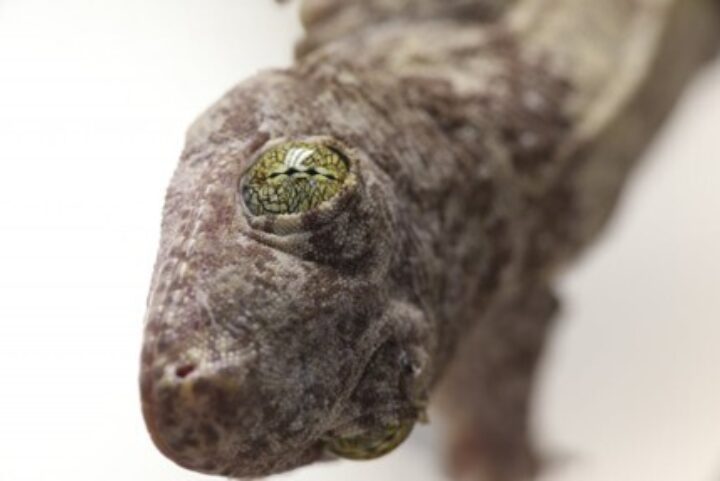
Figure 3:Gehyra vorax is native to insular Melanesia, and grows much larger than any Gehyra species from mainland Australia. Image Credit: Duncan Irschick at https://websites.umass.edu/irschick/geckos/.
The authors note that the membranacruralis and vorax lineages are highly arboreal and speculate that large body-size in geckos might typically be associated with an arboreal lifestyle. Although they did not test this hypothesis, it is intriguing that many of the smallest reptile species on Earth belong to the terrestrial gecko genus Sphaerodactylus, of which the adults of some species barely exceed half an inch in length.
Another Piece of the Biogeographical Puzzle
Over 170 years after Wallace set sail for the Pacific, he is no longer obscure and is instead widely hailed as the father of biogeography (not to mention one of the most-highly esteemed past Fellows of the Linnean Society of London!). Nevertheless, the important work that he began remains unfinished, and so scientists like Oliver et al. will continue working to piece together the biogeographical puzzle posed by this enigmatic corner of the Earth.
Guest Blogger
Written by T.W. Fieldsend, a Research Associate at Imperial College London with an interest in ecology, evolutionary biology, genetics, taxonomy and zoology. He currently studies the evolution of genetic resistance to insecticides in malaria-vectoring mosquitoes. His PhD research focussed on the genetics of non-native geckos in southern Florida. Edited by Georgia Cowie.
About the Journal
This blog was inspired by a paper published in our Biological Journal, the direct descendant of the oldest biological journal in the world. It publishes ground-breaking research specialising in evolution in the broadest sense, and especially encourages submissions on the impact of contemporary climate change on biodiversity. Want to contribute to a blog? Contact the Journal Officer directly.