In Early Cretaceous Forests: There's Mushroom for Fossils
How a beautifully preserved fossil reveals one of the oldest gilled mushroom forming fungus ever found. Written by guest blogger Isabelle Pola.
Published on 22nd June 2026
Mushrooms rarely leave a trace. Their soft, short-lived bodies decay within short time frames, making them one of the most elusive organic structures in the fossil record.
Yet in a remarkable discovery, researchers have uncovered not one but fourteen exceptionally preserved fossil mushrooms in 113-million-year-old rocks from Brazil. Preserved in impressive detail, from overall shape down to microscopic structures, these fossils offer a rare window into ancient fungi.
In a new paper published in the Botanical Journal of the Linnean Society, this study extends the known evolutionary history of familiar fungi such as Russula and Lactarius (milkcaps) and contributes to our understanding that complex mushroom forms were already thriving in forests during the age of dinosaurs.
A Fossil Against the Odds
Fossilised mushrooms are few and far between, which is what makes this discovery so remarkable. The fossils come from a remarkable Early Cretaceous Lagerstätte in Brazil, a site known for exceptional preservation. Unlike most fossil fungi preserved in amber, these specimens are preserved in sedimentary rocks, an even rarer occurrence. What's more, the majority of fossil mushrooms known to date have been described from a single specimen, but here researchers were able to analyse 14 specimens from the same species.
Even more impressively, they retain fine structural details (Figures 1–2), including lamellae (gills)! These are the thin, blade-like structures beneath the pileus (cap) where spores are produced. Their presence allows researchers to identify the fossil as part of the class including gilled mushroom forming fungi: Agaricomycetes, a highly diverse group that dominates many modern terrestrial ecosystems.
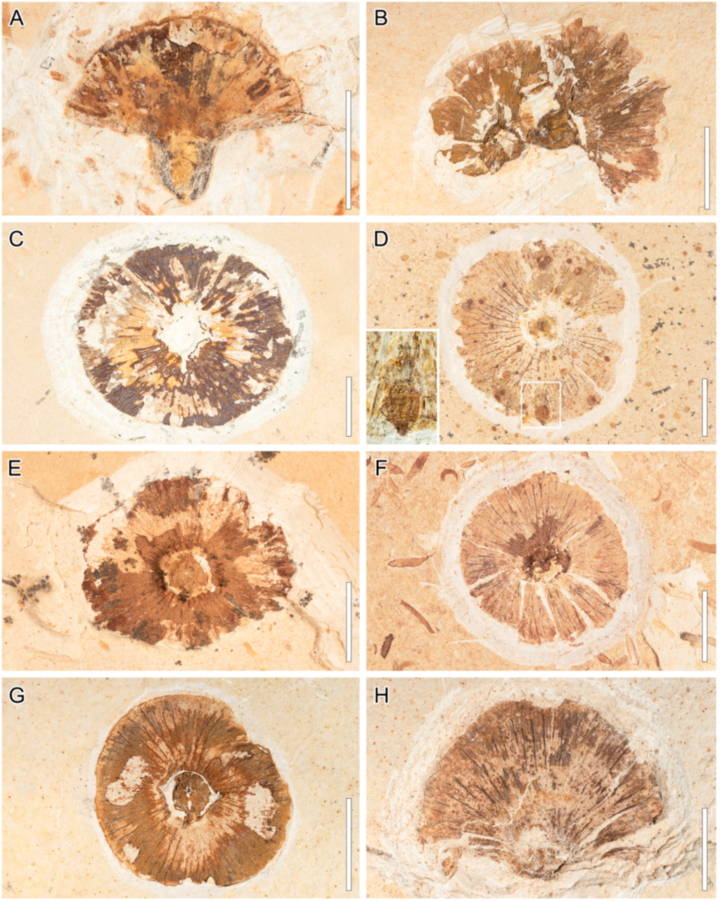
Figure 1: Fossilised mushroom specimens of Edaphagaricites conicus preserve both external shape and internal characteristics, showing cap and gill structures. Scale bars: 1 cm.
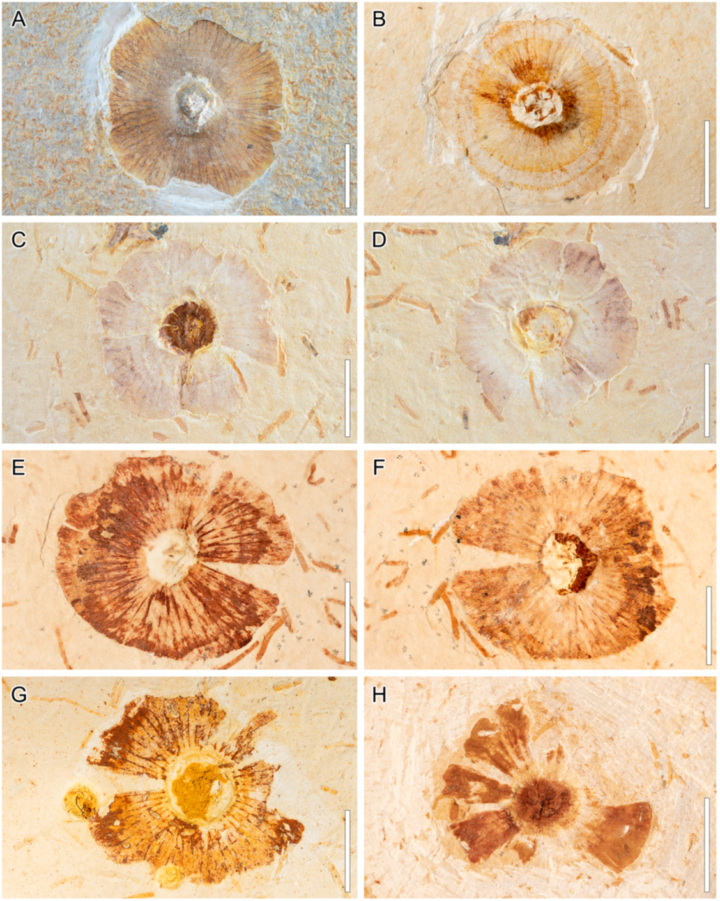
Figure 2: Additional fossil specimens of Edaphagaricites conicus, mostly flattened from above. Scale bars: 1 cm.
Because the fossils are somewhat flattened during preservation, researchers used 3D modelling to reconstruct what the organism likely looked like during life, based on different body plan inclinations of the fossils “printed” on the rock (Figure 3).
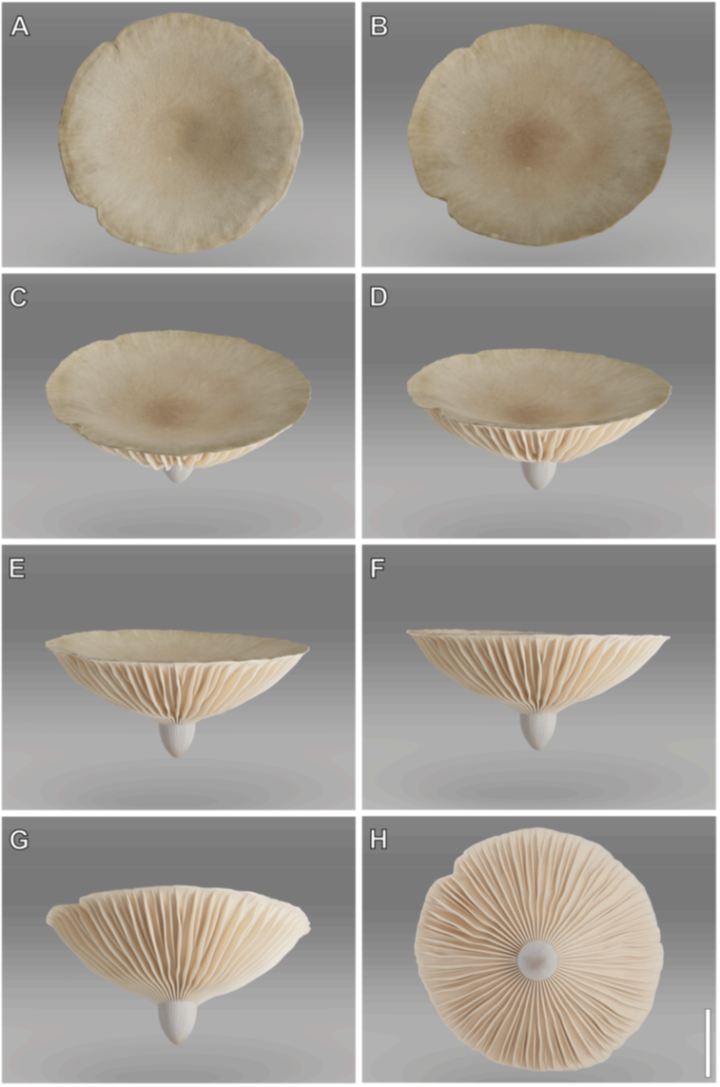
Figure 3: 3D reconstruction of what the ancient mushroom Edaphagaricites conicus may have looked like, based on fossil evidence. Scale bar: 1 cm.
Introducing Edaphagaricites conicus
These fossils represent one of the oldest known gilled mushrooms, with important implications for understanding fungal evolution. Dating to the Early Cretaceous, Edaphagaricites conicus is co-oldest with another species, Gondwanagaricites magnificus previously described from the same Brazilian formation. Together, these fossils provide the earliest reliable record of gilled, mushroom-forming fungi.
Until recently, the fossil record suggested that gilled fungi appeared later in Earth’s history, with most fossil mushrooms known from younger Cretaceous and Cenozoic deposits. However, discoveries like this provide an important piece of the puzzle, offering physical evidence that diversification occurred in the Early Cretaceous. A result of their outstanding fossilisation, these specimens preserved not only their overall shape but also microscopic tissue structures, enabling researchers to use scanning electron microscopy (SEM) to examine the fossils at cellular scale. These images reveal rounded cells known as sphaerocysts, which give modern Russula species their distinctive brittle texture (Figure 4). This, combined with the shape of the mushroom, provides an important constraint on when the family of this fungal group likely evolved.
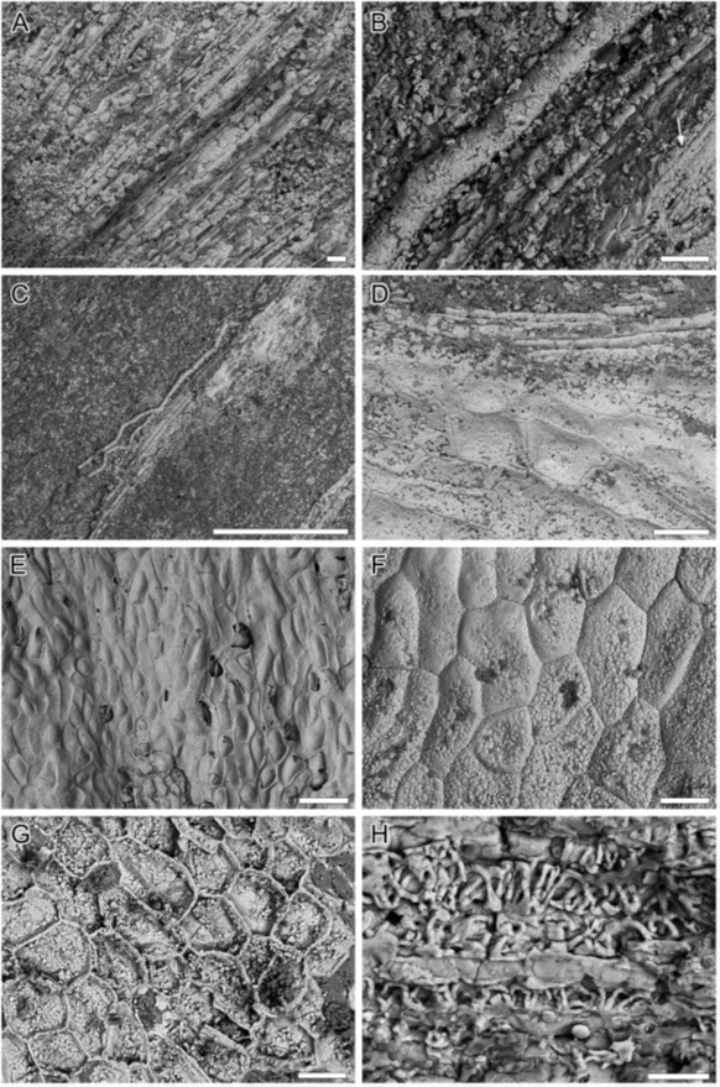
Figure 4: SEM images of Edaphagaricites conicus reveal fine details of the cap and gill tissues, including networks of fungal filaments (hyphae) and rounded cells (sphaerocysts) that are characteristic of modern russula-type mushrooms. Scale: A = 30 μm; B, F, G, H = 50 μm; C = 1.000 μm; D = 100 μm; E = 200 μm.
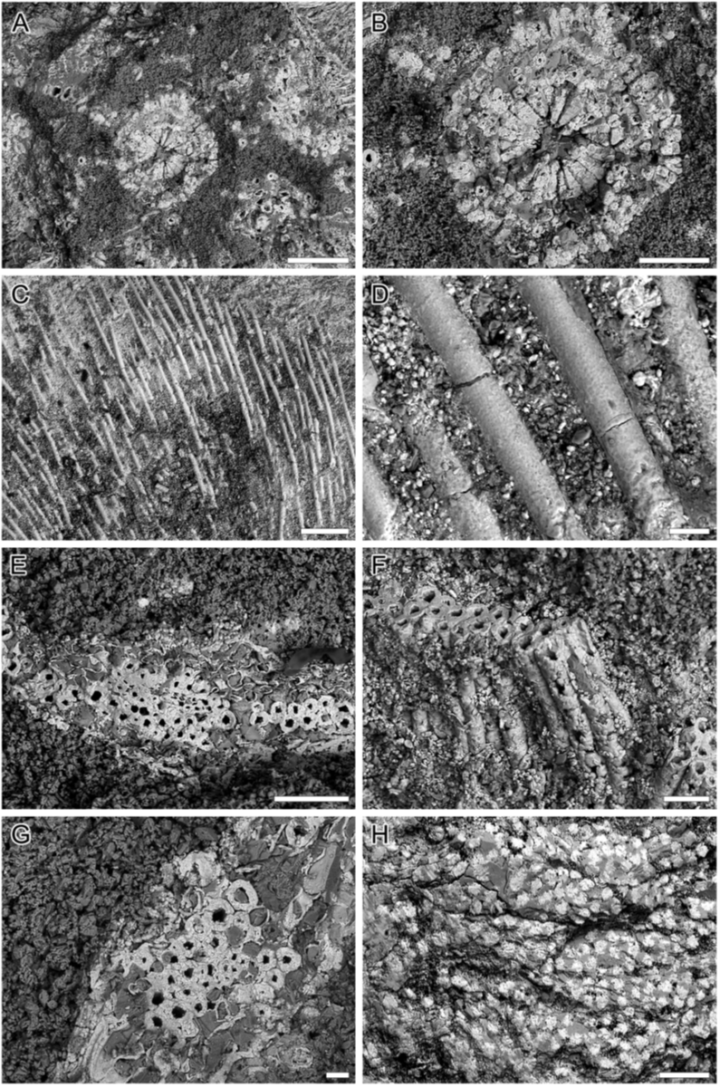
Figure 5: SEM images of Edaphagaricites conicus reveal the internal organization of the stem, including dense bundles of thick-walled fungal filaments (hyphae) that give it strength and rigidity. Scale: A, C = 200 μm; B, E, H = 100 μm; D = 20 μm; F = 50 μm; G = 20 μm.
Figure 5 shows that the stipe (stem) was rigid and fibrous, built from a complex of thick-to-thin-walled, vertically aligned thread-like filaments (hyphae), some of which exhibit a dense liquid substance when broken. The stem was likely robust and tapered toward the base, supporting the authors’ interpretation that Edaphagaricites conicus belongs within the Russulaceae family. The preservation of such fine cellular detail also highlights the exceptional conditions of the Crato Lagerstätte, which can preserve even delicate fungal tissues in stone.
Together, these features suggest that the ancestors of many modern fungi, including familiar genera such as Russula and Lactarius (Figures 6–7), have deeper evolutionary roots than previously recognised.
So why do we care about these ancient fungi? Not only is it a cool discovery, it also pushes back the timeline for when complex mushroom forms evolved. Today, gilled mushrooms such as Russula, Lactarius and Lactifluus play key ecological roles through mycorrhizal relationships (symbiotic partnerships with plant roots that help plants absorb nutrients). These interactions may have already been emerging in ancient ecosystems, helping both gymnosperm and angiosperm trees thrive in nutrient depleted soils of yore.
In other words, this ancient mushroom is recognisably related to fungi still living today!
Why Does This Matter?
Fungi are often overlooked compared to plants and animals, yet they play essential roles in ecosystems; from breaking down organic matter to forming partnerships with plants.
As the fungal fossil record is so sparse and difficult to interpret, fossils like this provide rare and valuable evolutionary reference points. The clear link between this species and modern fungal lineages helps researchers better reconstruct the history of fungal evolution.
The emerging picture is that major fungal groups evolved much earlier than previously thought, reshaping our understanding of how modern ecosystems developed.
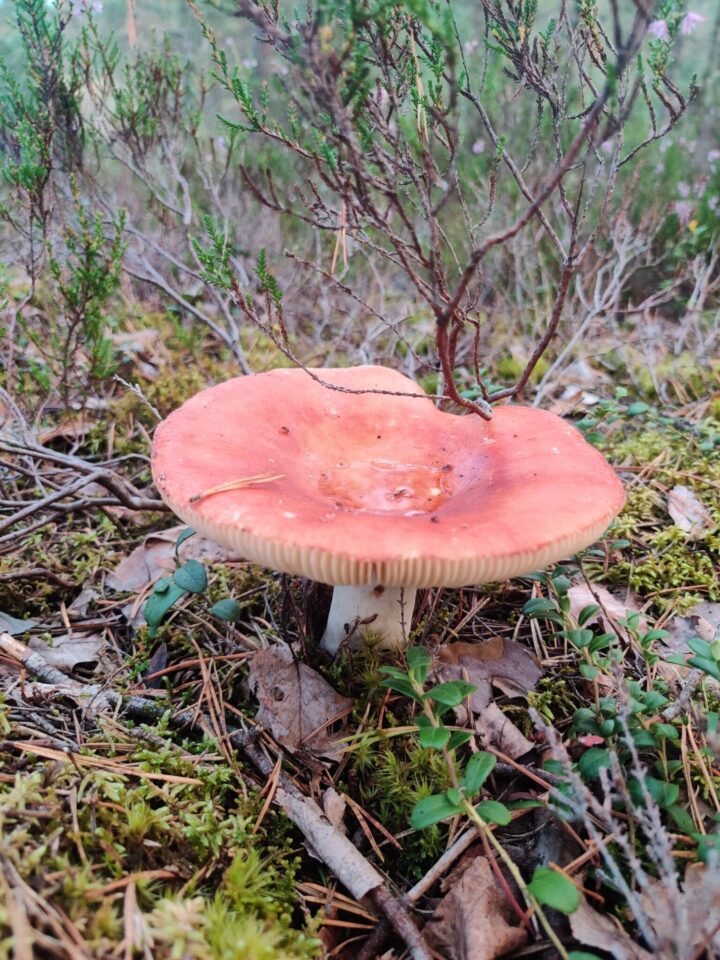
Figure 6: An extant Russula mushroom, a common group of gilled fungi known for their brittle texture. These mushrooms share key features with the fossil species, helping researchers link ancient and modern fungal lineages. Image Credit: Anna Nyman (Instagram: @foragingwithanna | Website: https://www.annanyman.fi/.)
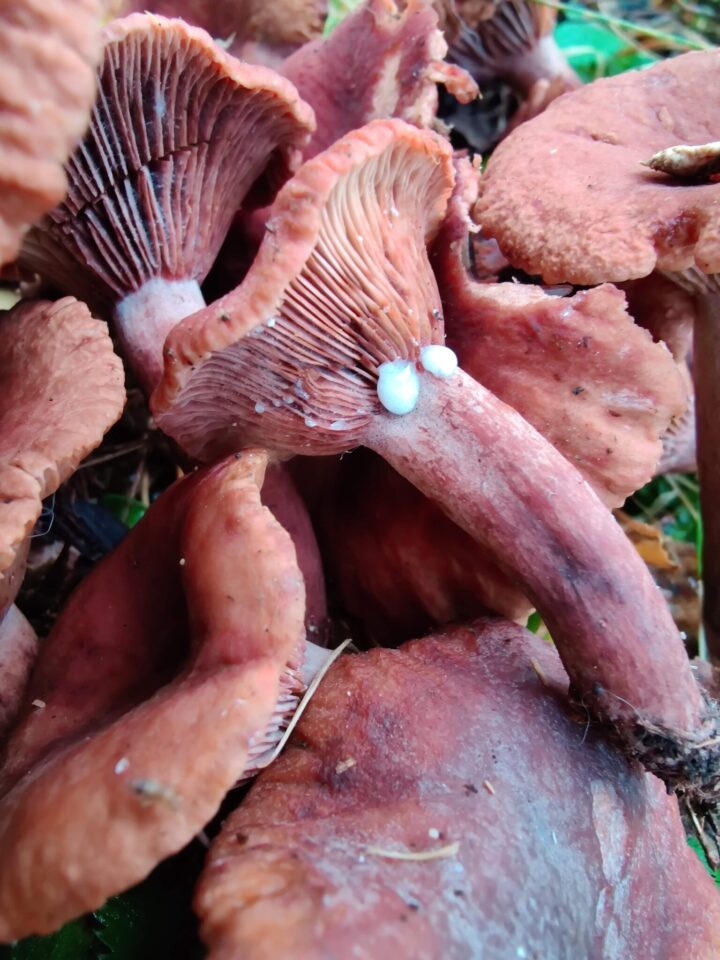
Figure 7: An extant milkcap (Lactarius) mushroom, closely related to Russula. Milkcap mushrooms release a milky fluid when damaged and provide a modern comparison for understanding the evolutionary relationships of the fossil species. Image Credit: Anna Nyman (Instagram: @foragingwithanna | Website: (https://www.annanyman.fi/).
Conclusion
The most striking aspect of this discovery is how familiar this ancient organism appears. Mushroom forming fungi like this were already thriving alongside dinosaurs, in ecosystems very different from today.
By preserving rare structural details, Edaphagaricites conicus offers a glimpse into the deep history of fungi! It shows that some evolutionary innovations are so successful, they remain largely unchanged for over 100 million years.
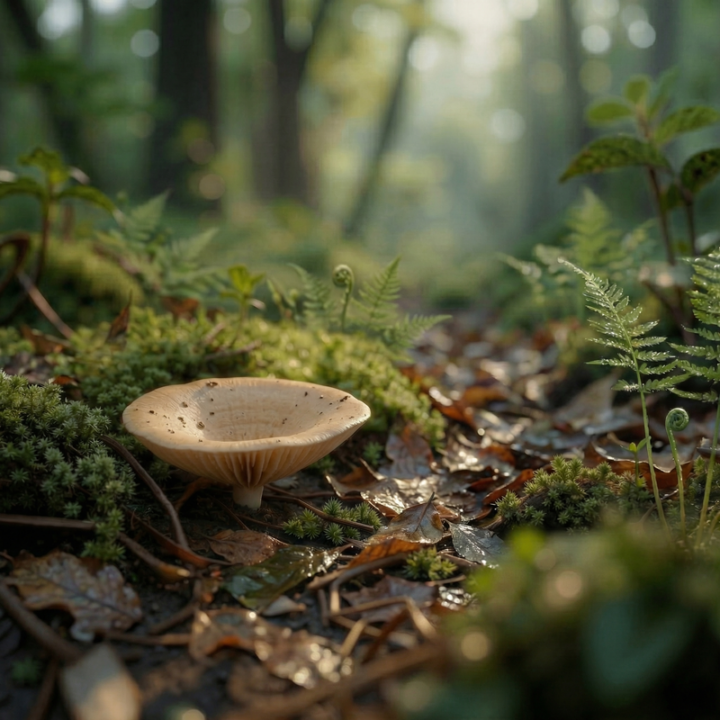
Figure 8: An AI and digital reconstruction of Edaphagaricites, considering what it may have looked like during life. Image Credit: Gisele Scheibler.

Guest Blogger
Written by guest blogger Isabelle Pola, an MSc Palaeontology graduate from the University of Helsinki, with a BSc in Geoscience from the University of Nottingham. Her studies focus on Cenozoic mammalian ecomorphology, palaeoecology, and ecometrics. She is particularly interested in how organisms respond to environmental disturbances, using geochemical approaches and 3D morphometric methods. Edited by Georgia Cowie.
About the Lead Authors: Jadson J. S. Oliveira
Jadson J.S. Oliveira is a Brazilian mycologist expert in Taxonomy, Systematics, and Molecular Phylogeny in Fungi, especially the Agaricomycetes gilled-mushroom forming groups. BSc in Biology at the UFRN and Doctor in Vegetal Biodiversity and Natural Environment – Avascular Plants and Fungi at Instituto de Botânica-SP with a sandwich internship and post-doctoral fellowship at the Royal Ontarium Museum. He is currently permanent researcher at the Instituto Nacional de Pesquisas da Amazônia, in the Coordination of Technology and Innovation. Has experience in morphological characterization including microscopy, culturing, DNA sequencing of Fungi, Ethnomycology and Palaeomycology, and interested in Fungal Ecology, Evolution and Biotechnology.
About the Lead Authors: William Vieira Gobo
William Vieira Gobo is a Brazilian paleobotanist specialist in taxonomy, systematics, paleoecology, and plant evolution. He holds a PhD in Geosciences from the Universidade Federal do Rio Grande do Sul (UFRGS), with a sandwich period at the Senckenberg Gesellschaft für Naturforschung Frankfurt (Germany). His research mainly focuses on the Early Cretaceous floras, with contributions to the origin, diversification, radiation, and paleoecology of flowering plants. Beyond angiosperms, his work extends to other co-occurring organisms such as conifers, gnetaleans, and fungi, reflecting a broad approach to reconstructing past ecosystems across deep time.