The Linnean Society Announces 2026 Medal and Award Recipients
This year we are proud to celebrate the work and perseverance of 10 individuals from a diverse range of fields, each bringing a unique voice to how we connect with nature.
Published on 27th April 2026
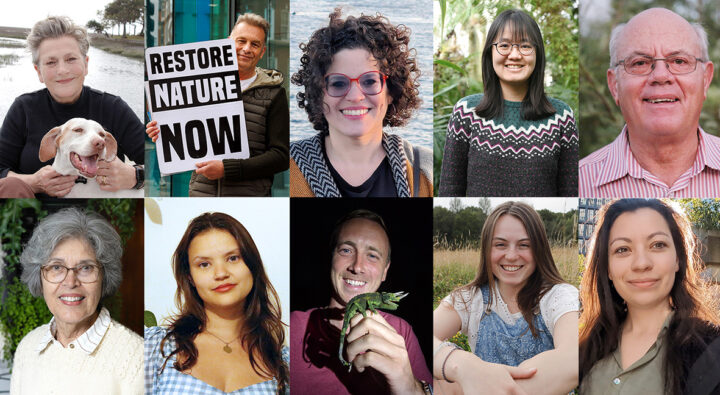
Since awarding its first Linnean Medal in 1888, the Linnean Society has recognised individuals devoted to science, natural history and understanding the natural world. This year we celebrate 10 people from varied fields, each offering a distinct way of connecting with nature.
Their work ranges from discovering blind fish species that have evolved for life in darkness, to leading long-term studies of natural selection in wild lizards. We also honour a much-loved natural history presenter who has tirelessly brought nature into UK living rooms for over 40 years, while championing threatened species to policymakers. Alongside them, we recognise the founder of a youth-led charity in Cumbria that has mobilised thousands for beach and forest clean-ups, combining a digital platform with workshops, events and festivals that drive climate action while supporting wellbeing and tackling eco-anxiety.
Together, all of the recipients reflect a shared commitment to protecting and understanding nature.
We are thrilled to celebrate the 2026 Linnean Society medal and award recipients, whose work advances our vision of a world where nature is understood, valued and protected. At a time when the importance of biodiversity and conservation has never been clearer, their achievements show the power of curiosity, dedication and scientific endeavour. Each awardee brings insight and leadership, deepening knowledge of the natural world and turning it into meaningful action. These honours recognise not only individual accomplishment, but a collective dedication to safeguarding life on Earth for generations to come.
Our 2026 Medal and Award Recipients
The Linnean Medal (For significant and sustained advances in the understanding of nature)

Credit: Jackie Black
Professor Melanie Stiassny
'My first visit to the Linnean was as a graduate student based at the Natural History Museum, and I was awestruck. Champion of the enduring importance of the study of natural history, and all that that entails, the Society has served as a bellwether throughout my career. I am beyond humbled by this award from a Society I so respect.'
Professor Melanie Stiassny has made a remarkable contribution to ichthyology through pioneering research on fish taxonomy, systematics and evolutionary morphology across the teleost tree of life, with particular focus on African freshwater fishes and cichlids. Her work blends classical anatomy with geometric morphometrics, microCT and DiceCT imaging and 3D reconstruction to explore how fishes evolve and diversify. Long-term fieldwork in the Congo River, conducted regularly since 1996, has revealed extraordinary patterns of biodiversity and speciation in complex river systems, including blind species adapted to low-light environments and evidence for gene loss in their evolution. Melanie has described over 70 new species, three genera, and a new family while documenting worrying declines in aquatic biodiversity. Her research has informed conservation strategies and championed the enduring importance of natural history collections.
The Linnean Medal (For significant and sustained dedication to the protection of nature)
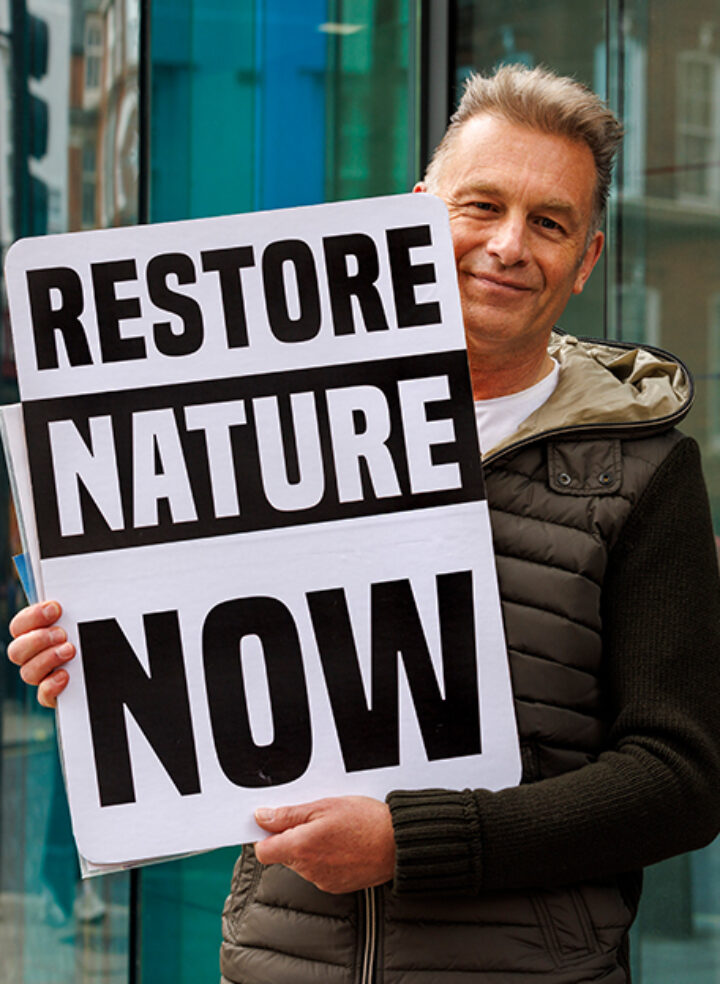
Credit: Marianne Kelly
Chris Packham CBE
'I am both surprised and flattered to have been chosen as a recipient of the Linnean Medal for significant and sustained dedication to the protection of nature. I’ve had the pleasure of visiting the Society a few times and am very honoured to accept this award.'
Chris Packham first came to national prominence in the 1980s as a presenter on the BBC children’s programme The Really Wild Show. He later ran the production company Head Over Heels, producing programmes for Discovery and National Geographic. Since 2009 he has co-presented Springwatch and its sister series, bringing British wildlife into millions of homes. He has also written and presented a wide range of nature programmes, alongside award-winning work raising awareness of neurodivergence and mental health issues.
Beyond broadcasting, he is a prominent environmental campaigner and co-founder of Wild Justice, which pushes for stronger wildlife protections. He has spoken out on issues including HS2, over-grazing, the badger cull and fox hunting, while supporting conservation organisations and championing diverse environmental voices.
The Bicentenary Medal (Awarded to an early-career scientist, in recognition of excellent research in the natural sciences)
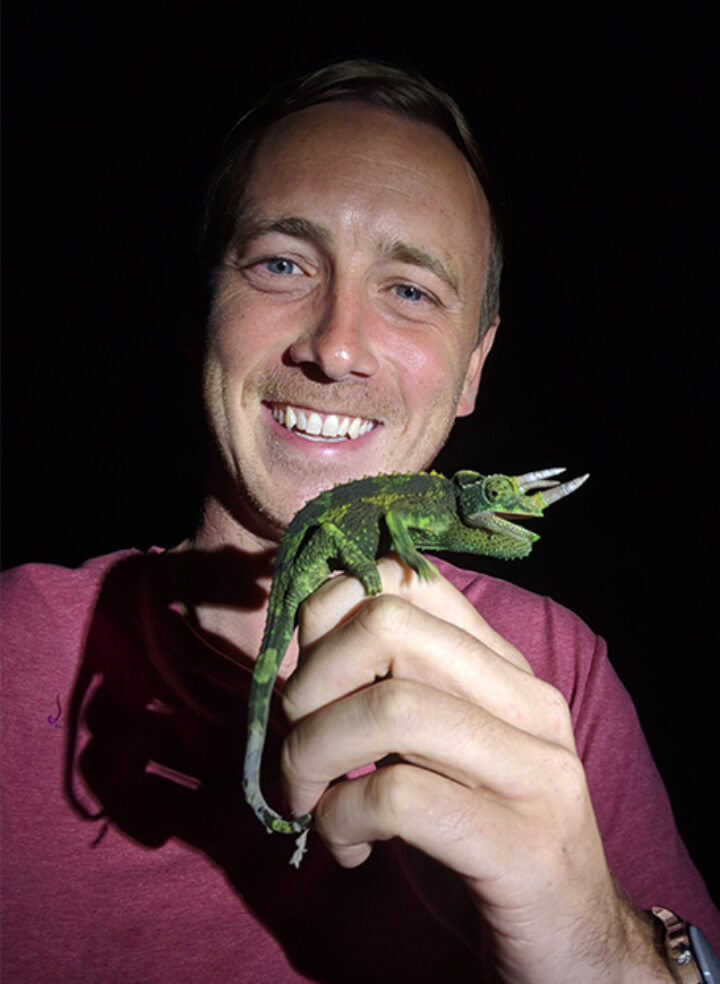
Credit: James T. Stroud
Dr James T. Stroud
'Receiving this honour from the Linnean Society of London is profoundly meaningful to me—both as an evolutionary biologist and a Londoner. To be recognized here, at the very heart of evolutionary biology’s history, is deeply personal, incredibly exciting, and very special.'
Dr James T. Stroud is an outstanding early-career evolutionary ecologist, recognised for the breadth and impact of his work. He has authored 61 publications with over 3,000 citations. In 2025, he received the Maxwell/Hanrahan Award for Field Biology and a Packard Fellowship from the David and Lucille Packard Foundation.
His 2025 paper in Nature synthesises key insights from long-term evolution research, complementing more than a decade of work on natural selection in a wild lizard community on ‘Lizard Island’, Florida—one of the longest-running multi-species studies.
Committed to mentorship and outreach, James founded Lizards on the Loose, which since 2014 has engaged thousands of middle-school students annually, produced 10,000+ biodiversity records, and introduced many underrepresented students to science.
The Irene Manton Prize (For the best doctoral thesis in botany [algae, fungi or plants], as judged by a paper published in the Linnean Society Journals)

Credit: Víctor Pérez-Calle
Natalia Ruiz-Vargas
'I'm thrilled and honoured to receive recognition from this society for what I consider the privilege of studying the evolution of Caribbean plants. Thank you to everyone who made this possible, especially my advisor, Dr Mason-Gamer.'
Winning Paper: Natalia Ruiz-Vargas, Dimitris A. Herrera, Roberta Mason-Gamer. Island Hopping: Dispersal of Pitcairnia L’Her. (Bromeliaceae) through the Caribbean islands, Botanical Journal of the Linnean Society, November 2025, boaf092, https://doi.org/10.1093/botlinnean/boaf092
Natalia Ruiz-Vargas and her contemporaries conducted field collections and gathered existing samples across the Pitcairnia genus (Bromeliaceae), with an emphasis on northern South America and Central America. They performed state of the art phylogenomic inference using high-throughput sequencing data for 63 individuals. Using this data they decipher evolutionary relationships in Pitcairnia, gene flow across the group, and phylogeographic patterns. Using biogeographical analyses, they discovered the origin of the Caribbean species, with a likely dispersal event from Venezuela to the islands around 200,000 years ago.
From the Editor:‘Natalia Ruiz-Vargas’ paper represents an impressive piece of work, and rather unusually for a PhD student, Natalia has driven the study from conceptualisation through to data collection and analyses. The phylogenomic data analysis is not trivial and the analyses and overall paper are neatly presented, with the findings very clearly communicated.’ —Dr Steven Dodsworth, Editor-in-Chief, Botanical Journal of the Linnean Society
The John C. Marsden Medal - 1 (For the best doctoral thesis in biology covering areas other than botany [algae, fungi or plants], as judged by a paper published in the Linnean Society Journals)

Credit: Lívia Roese-Miron
Lívia Roese-Miron
'I am deeply honoured to receive the John C. Marsden Medal. This recognition reflects the efforts behind this work and highlights the importance of studying synapsid evolution. I am especially grateful to my co-authors and mentors, whose support and insight were essential to this research.'
Winning Paper: Lívia Roese-Miron, Fernando Abdala, Flávio Augusto Pretto, Rodrigo Temp Müller, Iasmim Michelotti da Costa, Marcelo Ricardo Sánchez-Villagra, Leonardo Kerber. Skull anatomy and endocranial casts of Siriusgnathus niemeyerorum (Cynodontia: Cynognathia) from the Late Triassic of Brazil: implications for the evolution of traversodontids, Zoological Journal of the Linnean Society, Volume 205, Issue 1, September 2025, zlaf107, https://doi.org/10.1093/zoolinnean/zlaf107
First emerging in the Late Permian, cynodonts mostly went extinct in the Triassic with only a few lineages surviving, including the lineage that would evolve into modern mammals. Roese-Miron et al. (2025) provide a detailed analysis of a nearly complete skull of Siriusgnathus niemeyerorum, a cynodont that lived over 200 million years ago. Using high-resolution CT scanning, they reconstructed internal features of the skull including the first ever descriptions of the cranial nerves and inner ear canal of the species. The researchers discovered new features associated with facial mobility, a finding with implications for how these ancient animals fed, defended themselves and socialised.
From the Editor: ‘I was impressed by the quality of the figures and the analytical rigour of this study. I think it is simply amazing we can use technology to study the nervous system of an animal that lived over 200 million years ago.’ —Dr Jeff Streicher, Editor-in-Chief, Zoological Journal of the Linnean Society
The John C. Marsden Medal - 2 (For the best doctoral thesis in biology covering areas other than botany [algae, fungi or plants], as judged by a paper published in the Linnean Society Journals)

Credit: Luo Chen
Wenjie Zhu
‘I am honoured and humbled to receive this award. It recognises work on the multispecies coalescent, where I learned that uncertainty in biology is often not noise to be eliminated, but signal to be understood. Beyond acknowledging past work, this award also motivates my ongoing research.’
Winning Paper: Wenjie Zhu, Sebastian Höhna. Two-step species tree inference under the multispecies coalescent using full-likelihood, Evolutionary Journal of the Linnean Society, Volume 4, Issue 1, 2025, kzaf018, https://doi.org/10.1093/evolinnean/kzaf018
Inferring species relationships is challenging because different genes may show conflicting histories, which the multispecies coalescent (MSC) model explicitly accounts for. This study introduces a two-step approach, providing a novel full-likelihood methodology for MSC inference that first estimates gene trees and then infers the species tree, combining computational efficiency with statistical rigour. Simulations and an analysis of gibbons show that the two-step approach performs consistently well, offering a practical, innovative solution for large genomic datasets and advancing our ability to reconstruct complex evolutionary histories.
From the Editor: ‘This paper stands out for addressing the trade-off between statistical rigour and computational feasibility in species tree inference. Its two-step, full-likelihood framework under the multispecies coalescent, delivers both methodological innovation and clear guidance on when different approaches succeed or fail.’ —Professor Julia Day, Editor-in-Chief, Evolutionary Journal of the Linnean Society
PhD Student Paper Prize (Awarded to a doctoral researcher whose work forms an important part of a published journal article, as judged by a paper published in the Linnean Society Journals)

Credit: Sierra Lopezalles
Dr Sierra Lopezalles
‘I am honoured to accept the PhD Student Paper Prize from the Linnean Society. Completing my PhD has been a deeply satisfying experience and receiving this award in recognition of it is a delightful and unexpected privilege.’
Winning Paper: Sierra M. Lopezalles. The shape of speed: 3D geometric morphometrics of the humerus predicts maximum running speed in canids (Carnivora: Canidae), Biological Journal of the Linnean Society, Volume 146, Issue 4, December 2025, blaf118,
https://doi.org/10.1093/biolinnean/blaf118
This study exemplifies the power of integrative evolutionary biology by linking morphology, performance and the fossil record. Using 3D geometric morphometrics of the humerus across domestic dog breeds, the author exploits exceptional variation in limb form and running speed to uncover a strong relationship between bone shape and size-corrected maximum speed. This relationship is validated in wild canids and applied to estimate locomotor performance in fossil species, including the dire wolf and early canids. By translating skeletal form into quantitative predictions of performance, the study provides a robust framework for reconstructing functional evolution and ecological dynamics in extinct mammals.
From the Editor: ‘I was impressed by the study’s integrative approach, which bridges morphology, performance, and deep-time inference. By leveraging the extraordinary diversity of domestic dogs, the authors resolve a long-standing challenge in palaeontology and deliver a rigorous, quantitative method for predicting locomotor performance in extinct species with broad evolutionary implications.’ —Dr Karen Sears, Editor-in-Chief, Biological Journal of the Linnean Society
The John Spedan Lewis Emerging Leader Award (For initiatives that have had a notable positive impact for the UK natural environment)

Credit: Another Way
Amy Bray
'I am delighted to receive the John Spedan Lewis Emerging Leader Award to recognise my work empowering, educating and mobilising young people to take action for nature in the UK. I hope that this award shows young people that change is possible and would love to accept it on behalf of all the young people in Another Way's community who speak up for nature every day. Often, the work and impact of young people go unrecognised, which makes awards like this all the more important. Thank you!'
Amy Bray is a young leader turning environmental concern into practical action. At 16 she founded Another Way, a youth-led charity that grew from a grassroots project in Cumbria into a national movement engaging thousands of young people, schools and communities. In 2021 she launched the Power of 10 movement and digital platform, giving young changemakers tools, resources and support to tackle climate challenges while building skills and resilience. Under her leadership, Another Way has planted more than 30,000 trees and led clean-ups and community initiatives across the UK. Recognised with the Prime Minister’s Points of Light Award and roles in national environmental programmes, Amy combines science, education and community action to inspire young people to lead lasting environmental change.
The H. H. Bloomer Award (Awarded to an amateur naturalist for their contribution to biology)

Credit: Hannelie Swanepoel
Wessel Swanepoel
'I am deeply honoured to accept the 2026 H.H. Bloomer Award. My sincere thanks to the Linnean Society of London for this incredible recognition. It is a privilege to contribute to our understanding of the natural world, and I accept this award with great gratitude and humility.'
Wessel Swanepoel is a remarkable modern explorer of Namibia’s desert flora. Born in South Africa and training as a civil engineer, his path changed after joining railway operator TransNamib in 1989, when travel across the country sparked his fascination with plants adapted to harsh, arid landscapes. His work soon centred on the remote Kaokoveld, a rugged region rich in unique species. In 2002 he discovered the tree Commiphora kaokoensis, beginning a close collaboration with botanists. Since retiring in 2017 he has devoted himself fully to exploration in Namibia and southwestern Angola. Now a leading authority on southern African species of Petalidium and Commiphora, by 2025 Wessel had authored or co-authored papers on 45 new plant species, including two new genera (Oberholzeria, Tiganophyton) and a new flowering plant family (Tiganophytaceae).
The Jill Smythies Award (To a botanical artist for outstanding, diagnostically relevant, published illustrations)

Credit: Theo Marques
Diana Carneiro
'From observing plants, I have come to understand that every being on Earth carries the secret of life within. As a botanical illustrator, I aim to raise awareness—especially among children and young people—about the need to preserve and restore the environments on which our existence depends. To the scientists and artists of nature who shape the history of this honourable institution, my sincere thanks.'
Diana Carneiro is a Brazilian artist and botanical illustrator based in Curitiba. Initially training in the biological sciences in 1968, she spent 25 years teaching science and biology before turning to botanical art full time. Later studying painting, she graduated from the School of Music and Fine Arts of Paraná in 1992. A 1997 Margaret Mee Foundation fellowship took her to the Royal Botanic Gardens, Kew, where study with artist Christabel King deepened her commitment to botanical illustration. Working in watercolour and pen and ink, Diana has produced approximately 400 descriptive botanical illustrations, including newly discovered species. Her work appears in journals worldwide, and she trains illustrators through the Centro de Ilustração Botânica do Paranáthe (Center for Botanical Illustration of Paraná or CIBP), of which she is a founding member.
Our medals and awards will be officially presented at the Society's Anniversary Meeting in May.