Tipping the Scales: How John Hooper Balanced Bats and Citizen Science
This month, Journal Officer and bat enthusiast Georgia Cowie looks at John Hooper's bat scales and their importance in British bat research.
Published on 2nd April 2026
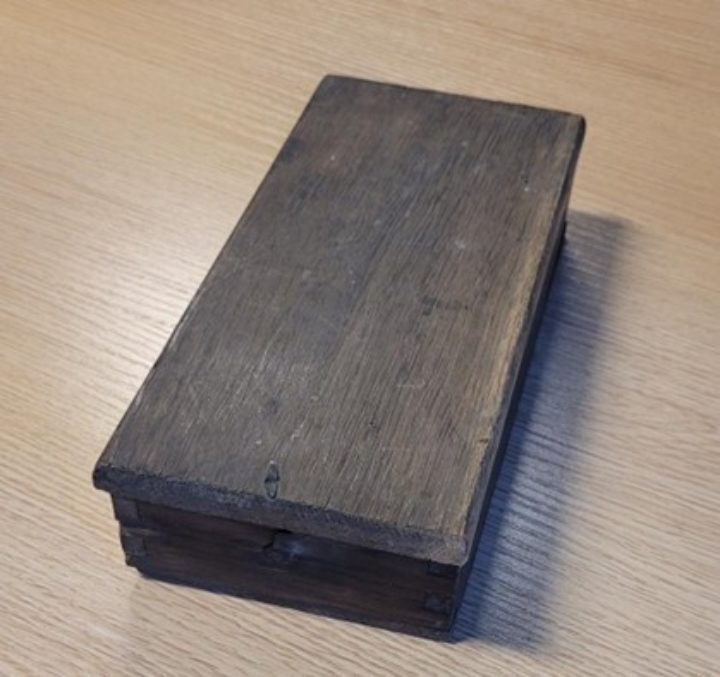
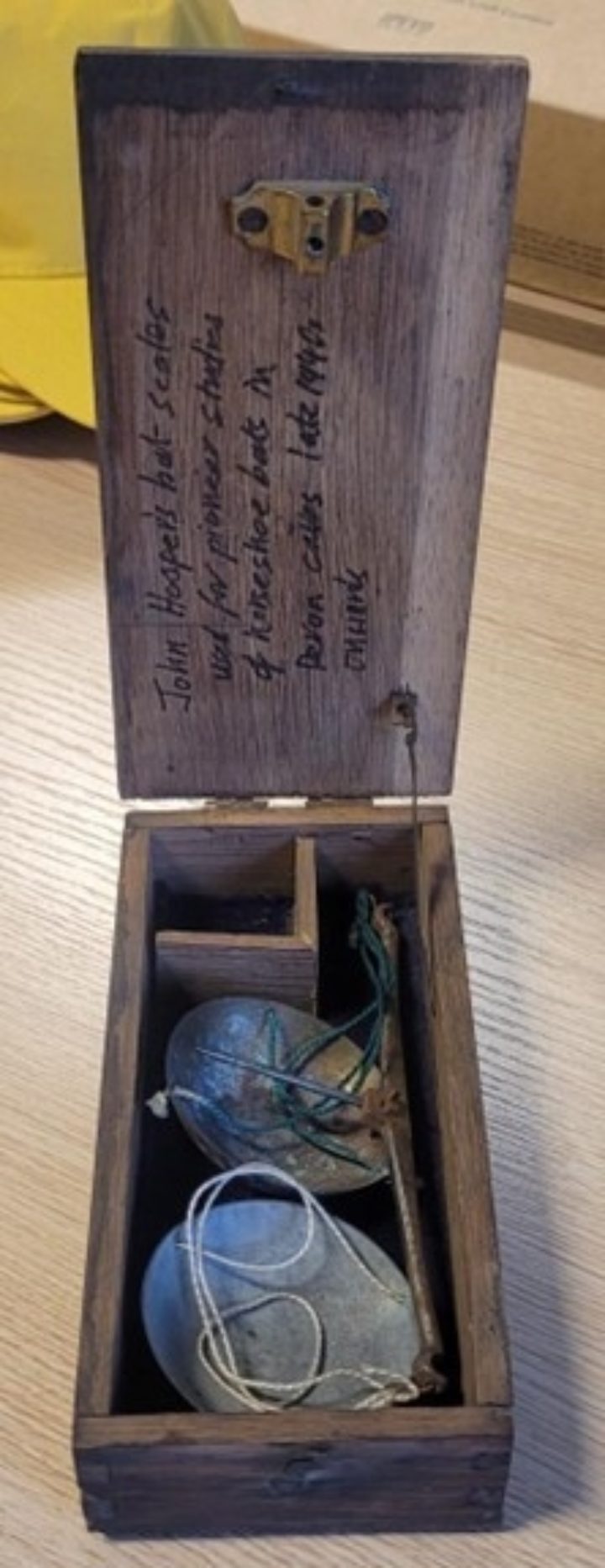
If you visited our aptly named exhibition Wonder last year—which highlighted all sorts of peculiar items from across our collections—you may have noticed a small wooden box that looked like a cross between a dominoes set and old kitchen scales. These were John Hoopers bat scales, and they did exactly what you’re thinking.
Who was John Hooper?
Chemist by day, naturalist by night, John Hooper (1916-2006) was the epitome of the phrase ‘don’t let your hobby become your day job’. As founder and very active member of the Devon Speleological Society, Hooper would often find himself underground. Mapping caves and the extraordinary features of this hidden world, he frequently encountered large bat colonies – most often horseshoe bats. At the time (and arguably still to this day), bats were held with an air of mystery and misunderstanding. Their reputation as evil spirits of the night had already taken hold, and with echolocation only discovered in the 1938, bat research was in its infancy. Armed with frequent access and a good deal of curiosity, John took advantage of this lack of understanding and pursued a 50-year career of bat research.
Yet John Hooper was not a classically trained bat ecologist. In fact, he was not an ecologist at all, but rather an ‘amateur naturalist’—though one could argue the title ‘amateur’ is unjust. Starting in 1947, Hooper became a pioneer of bat ringing (an activity now only possible to do with a license), helped to create the first mobile bat detectors, and even took some of the very first photos of Horseshoe bats in flight. He was an early champion of changing public opinion on bats—something that is still ongoing—and played an important role in identifying different species’ echolocation calls. Amateur? I think not.
His contribution to chiropterology, also known as the study of bats, is undeniable to those who have engaged with his work, but his private nature has meant much of what he did has flown under the radar. His collections were donated to The Society in 2005, and with them the scales seen in our exhibition.
Why should we care about these tiny scales at all? One could argue that John Hooper was just a man who loved bats, and this was just a little box with some metal apothecary scales in. Whilst technically true, they are so much more than that; they represent the early stages of British bat research, and the remarkable impact one person can have in the field of ecology.
A little bat-ground
The UK is home to 18 species of bat, all of which are insectivores—meaning they hunt insects using echolocation. To say 18 is a little cheeky, as one species (the greater mouse-eared bat) has only recently returned to our shores after being declared locally extinct in the 1990s. Nevertheless, our towns, cities and wild spaces are full of flying mammals—you just have to know where to look.
Though their reputation as scary blood-sucking creatures extends far back into ancient times, the reality is they’re ecologically invaluable— serving as pollinators (you can thank bats for tequila), natural pest controllers, and indicator species—all wrapped up in one cute flying mammal.
How do you weigh a bat?
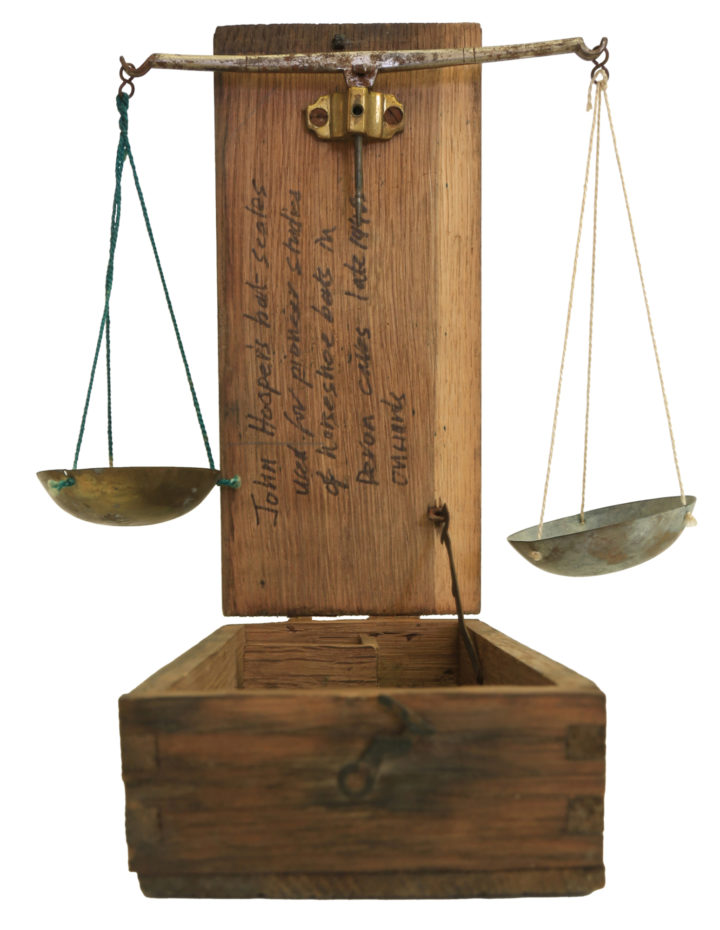
Nowadays, bats are weighed in blackout bags hung on spring balances, reducing the level of stress experienced by the individual—quite different from the small wooden box seen in our collections. Hooper’s scales are rudimentary, consisting of twin pans with loose weights. Accurate spring balances were not yet available during Hooper’s research years, so this was the best that could be done at the time. You might well be looking at those tiny pans and thinking how on earth did they get the bat to sit still for long enough to be weighed?! I thought the same, and after a little investigation discovered that Hooper would persuade the bats to hang from one side of the scale pans, enabling him to take their weight with surprising ease.
So we know the how, but why did he bother?
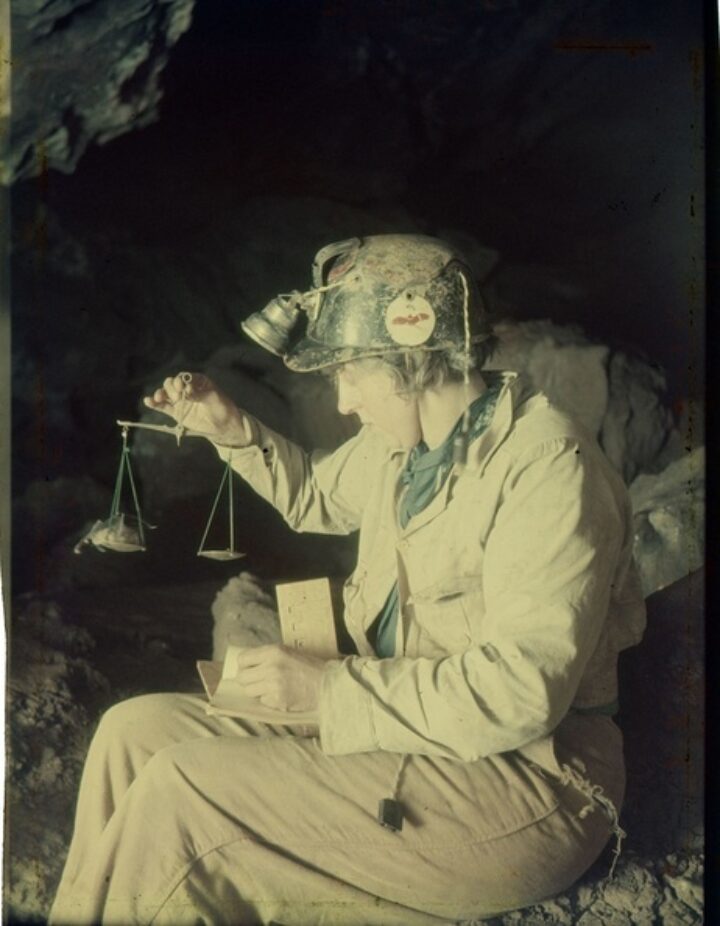
John Hooper's bat scales in use. Credit: MCRA Photo Gallery/John Hooper
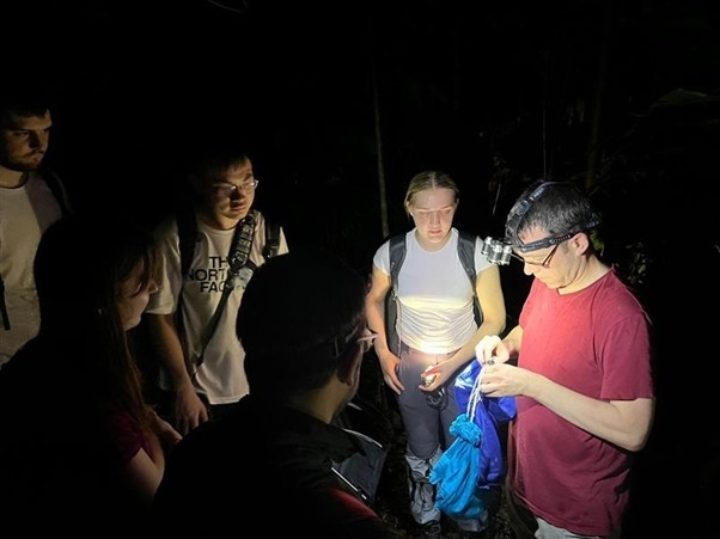
Students in Borneo harp trapping bats. Credit: Georgia Cowie
As already mentioned, bat research in Britain was in its infancy, and not much was known about their behaviours or population dynamics. The use of these scales led to the discovery that horseshoe bats would lose approximately 5.5 grams during hibernation; Hooper also being the one to discover the first evidence that their hibernation was not uninterrupted by tracking movements of bats during the winter. His data collection was so thorough that it can still be used today (with the help of modern statistics) to gain a new understanding of bat populations of yore.
Alongside this, his use of early bat detectors and his dedication to surveying also led to the rediscovery of several populations around London in the 1970s. This was extraordinary at the time, as many people believed the London Fog (AKA toxic smog) had killed them off in the 1950s.
Why do we care?
Unassuming at first glance, these scales carry significance far beyond their appearance. They are a testament to Hooper’s passion, and his dedication to such outside of his day job. Working in the natural history sector, this is something that I believe we all can agree is a driving factor in our work.
I share in Hooper’s love of bats; you need only glance at my desk to figure this out. I’m surrounded by bat doodles, stickers, detectors and even a plastic bat toy gifted to me by a friend. When I look at these scales, I see the possibility that I too can do my part in improving our understanding, or changing public opinions of, these creatures.
The scales are also a shining example of what it means to be a scientist; you don’t need a fancy degree, white lab coat or microscope to qualify. All you need is curiosity, passion and enthusiasm. Citizen scientists, like Hooper, can and do add as much value to scientific research as those with degrees. So, get out there! Find your weird niche animal to investigate, plant to become fascinated with or habitat to survey! Who knows, your version of these scales could be held in our collections in 100 years’ time…
Written by Georgia Cowie, Journal Officer at the Linnean Society
Reference note: Much of the information about John Hooper comes from an article in our membership publication The Linnean. For a full list of references and to find out more, please find the article on our website: https://ca1-tls.edcdn.com/documents/Lin-vol-26_-no-2_-July-2010.pdf?v=1455346888
Reference
Morris, P. and Yalden, D. (2010). John Hooper: Pioneer British Batman. The Linnean 26(2): 13–22.