Listening to Women’s Voices: The Beautiful Bioacoustics of Beetles
When squeezing some beetles led to an interesting discovery. Written by guest blogger & Engagement Officer Scarlet Forrester.
Published on 26th March 2026
When you think about noisy bugs, you probably think of crickets, cicadas, maybe the humble hissing cockroach. What may not spring to mind are scarab beetles, specifically these little guys: Polyphylla davidis (Figure 1).
This species in the Scarabaeidae family recently became the subject of some amazing research into bioacoustics and defence mechanisms in beetles. In a new paper published in the Biological Journal of the Linnean Society, Qifeng Tan et al. set out to investigate this behaviour.
How Do You Study Beetle Noises?
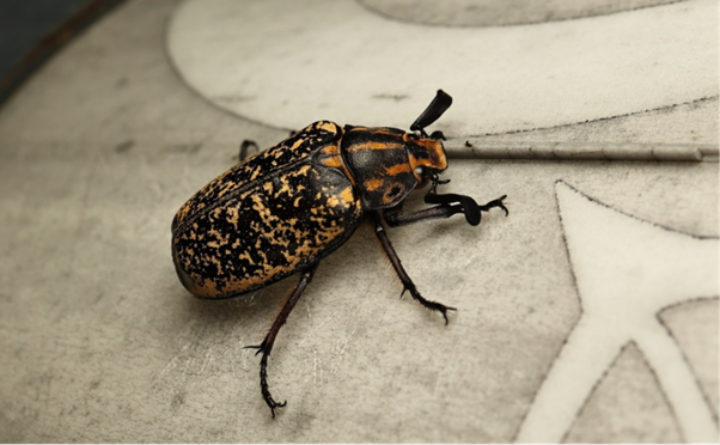
Figure 1: A close-up image of Polyphylla davidis in all its glory. Isn't she cute?
Well, first you must understand what it is they have to talk about. What reason would a beetle have for making sounds, besides forming one of the most influential bands of the 20th century? When the world is very large and you are a very small, very delicious invertebrate, you would think the wise move would be to lay low and keep quiet.
But, I hear you cry, did you not just list off a whole swarm of noisy insect species? Yes, some bugs have decided a little risk is worth a bigger payoff: getting laid. The sultry sounds of cricket courtship are an evolutionary exchange not favoured by most—in fact many predators have figured out that the chatter of noise-making male insects is a solid lead to an easy meal. Rather than advertise their location to anyone looking for a snack, the vast majority of beetles have decided to stick to creeping secretly in the earth. In fact, cockchafer beetles were asked to appear in court in the 1400s for this very crime (page 117).
Things Aren't Always As They...Sound?
We are discovering that this is not always the case; beetles are not always so silent. For the first time, scientists have put the acoustic signalling—or general noisemaking—of Polyphylla davidis under the micro- er, stethoscope. Beetles have not been investigated for their ability to chatter nearly as much as some other insect species. And it’s understandable: they are a lot harder to hear!
These scientists decided to listen to women’s voices. Well, specifically, to the stridulations of female specimens of P. davidis. Following strict parameters, thirty-four beetles were captured, and in laboratory conditions…mildly annoyed. Half of the beetles were subjected to a gentle squeezing of the thorax by blunt forceps, while the other half were prodded, rather than pinched. Rather understandably, none of them particularly enjoyed the experience—and almost all of them made it known by making some noise about it.
Stridulate, My Angel of Music! Stridulate For Me!
Having determined that these beetles have some things to say, the next step was to discover exactly how they were saying it. They didn’t warm up their vocal cords and sing about it (though if they did, I’m sure these beetles would be singing ‘Help!’). Instead, they made use of their stridulatory organs: rough patches on the legs and elytra (wing cases) that they rub together to produce vibrations in a frequency that we (and more importantly, their predators) can hear. These ‘alary–elytral’ structures were studied under an electron microscope, and you can see some of the noise-making bits here (Figure 2).
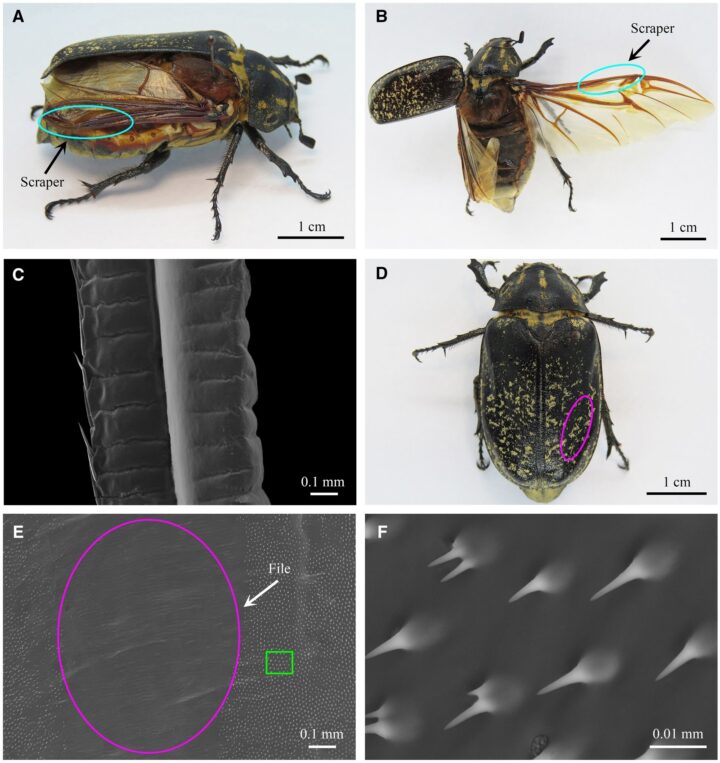
Figure 2: Sound-producing structures of female Polyphylla davidis.
In measuring these frequencies, Tan et al. learned that there is no ultrasound component to these beetle hollers. Some insects do produce ultrasonic frequencies, which can have sonar-jamming properties for predators, such as bats, that rely on ultrasound to locate their prey. P. davidis, however, make no such sounds. So why are they doing it? Are P. davidis simply shouting at predators to stay away?
Not quite.
Double Trouble!
P. davidis only really begin making a racket when they are already being attacked, (or bothered by some well-meaning biologists), which doesn’t seem like the most effective time to deploy a defensive sound. If anything, it seems too little, too late.
However, these beetles have another trick up their sleeves: caustic vomit. In all cases of these beetles making defensive noises, they also regurgitated a chemical defence fluid from the gut. It’s not known for sure, but the working theory is that the beetle noises paired with the rapid redistribution of their gut biome may be intended to teach predators to heed their warnings. If they say, “hey, don’t eat me, I’m yucky!” and then follow through enough times, maybe predators will begin to listen.
This is a theory that will require further experiments to determine whether predators are able to learn this association, or if the mystery of the beetle screams is deeper than we thought…
Don’t Beetle Round the Bush
There is a lot we still don’t know about beetle bioacoustics. With more research on the way, perhaps it won’t be long before we achieve the real goal in all of this: giving them some tiny guitars and drum sets and seeing what sort of sounds they’re really capable of.

About the Journal
This blog was inspired by a paper published in our Biological Journal, the direct descendant of the oldest biological journal in the world. It publishes ground-breaking research specialising in evolution in the broadest sense, and especially encourages submissions on the impact of contemporary climate change on biodiversity. Want to contribute to a blog? Contact the Journal Officer directly.
Guest Blogger
Written by Scarlet Forrester (pictured), an MSc Psychology graduate and Engagement Officer at the Linnean Society. Her focus is science communication, with research interests lying in animal behaviour, from chimpanzees in Sierra Leone to dolphin migration patterns in Northern Wales. Edited by Georgia Cowie.